
Time
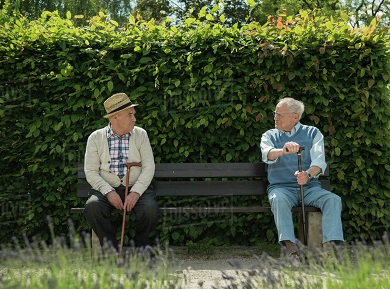
Yesterday I popped over to spend a couple of hours with my old friend Patrick in order to work upon our latest pet project. Before we got down to business, in catching up upon each other’s news, I mentioned in passing that a couple of days previously my younger brother had told me that one of his best friends had died suddenly last week at the tender age (for us) of just fifty-eight.
Being a noisy but also religious fellow, upon occasions like this Patrick can be relied upon to push himself forward to offer love, comforting words and support. In the recent past he’s had his own dose of tough times with bereavements of individuals in his family, friends, work colleagues, acquaintances and in some instances people with whom he had only a passing connection (he estimated about fifteen in total in the last two years or so) – this not only because as a personality he is the sort of chap that people tend naturally to turn to, but also because, over the past three decades or so, he has developed a facility for writing and giving splendid eulogies. The irony is that, sometimes, the frequency with which his services are called for in this respect take a personal toll upon him but such is his relentless positivity that he cannot help but ‘rise to the occasion’ every time one occurs.
It wasn’t long before our conversation had switched to what, for us, was probably a profound topic – viz. the brevity of human life. It goes without saying that Patrick and I were coming at it from our perspective as sixty-somethings, a time of life when naturally consideration of the human condition and its place in the universe probably comes to the fore more often than if one is in one’s twenties. [I therefore pause now to apologise in advance to those readers who may be in that bracket].
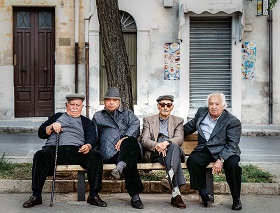 Patrick then called in evidence the American evangelist Billy Graham, who’ll be 98 in November, who recently was apparently asked what struck him most about human life and replied without hesitation “How short it is”. We then did the ‘Carpe Diem (‘Seize the day!’) as an excellent approach to life’ thing, albeit that – as a person of faith – Patrick then made a point of adding a dimension that I didn’t altogether feel was either correct or logical. He asserted (as people of faith often tend to do, with absolute certainty) that – for anyone without faith (presumably therefore taking the view that there was no afterlife) – life was to all intents and purposes meaningless.
I don’t necessarily follow that logic. It seems to me perfectly possible that, if you take the view that life here on Earth is all there is, you can intellectually decide you wish to live a ‘good life’ in a humanitarian sense (e.g. treat your neighbours as you’d like to be treated yourself, regard it as a bad thing to commit violence or kill anyone, pay your taxes, keep on the straight and narrow etc. ad infinitum) without necessarily needing the grounding of a religious faith to guide you towards these principles.
I certainly wouldn’t want to get too controversial about this, but – it seems to me, certainly in some cases – that some with religious faith and/or a belief in an afterlife may be primarily motivated to be ‘good on Earth’ for fear of being dealt with harshly in the afterlife and/or not getting quite the ‘good life’ that they were hoping for and/or expecting (i.e. presumably as a reward for being ‘good on Earth’ whilst they are here).
Arguably, surely, it is preferable to be ‘good on Earth’ simply because you’ve actually thought about it and that is what you’ve decided you want to be – rather than perhaps because you want to curry favour – and thereby gain yourself a better position – in the next world?
Putting aside for the moment those whose misfortune it was to die for whatever reason – war, accident, Act of God, disease etc. – well ‘before their time’, yesterday our brains trust soon agreed that, at our stage of life, we had near daily visitations of the effects of tempus fugit, (e.g. aches and pains, tiredness and so on) that we had never been prey to in our youths, that constantly reminded us of it.
Patrick then mentioned an unnamed person of his acquaintance (from the way he talked possibly someone that I also knew, but he didn’t say whether this was the case and so I didn’t ask) who wasn’t coping with old age at all well. Although Patrick and I appeared to have similar attitudes towards old age ourselves – certainly not revelling in or welcoming it, but unafraid of its symptoms as from time to time they made their appearances. In contrast, the person he was now discussing was ‘raging against the dying of the light’ in spectacular fashion, doing everything he could to remain young but then getting more and more depressed whenever a sign came along that he wasn’t succeeding.

THEN
A piece I had seen recently in a newspaper came to my mind at this point.
The former Friends actress Courteney Cox had been in the news because – appearing in an episode of some new Bear Grylls ‘Living In The Wild’-type television series made in America – she had admitted that in her efforts to remain young in appearance (an ongoing issue for actresses, of course) over the years she had done things to her body, particularly her face, in terms of cosmetic augmentation which, despite all her determination never to ‘over do it’, had ultimately had the effect of rendering her appearance something of a train wreck.

NOW
Arguably this was a brave move by Ms Cox – and one for which she should be applauded – but when confronted with evidence of how she now looks, and then also examples of how she looked twenty-odd years ago, it was very difficult to disagree with her own conclusion.
Since all human life comes to an end at some point I don’t feel there’s anything whatsoever to be gained from worrying about it. In one Woody Allen movie (sadly, I cannot remember which one) he has a quip in which his character discusses death thus: “I’m not afraid of death … I just don’t want to be there when it happens”. I suspect that‘s a pretty universal sentiment.
In the meantime, since I reached my fifties I have been dealing with a gradually-increasing list of random ailments and lost abilities to do what once I could. Some might say that I am ‘giving up’ too early – i.e. broadly, accepting limitations before I need to – but I regard all this as a totally natural aspect of life as we get older. I’m in my mid-sixties now and the fact is I cannot bloody well do what I could do when I was eighteen. And frankly, I have no desire whatsoever to do now most of the things that occupied my waking hours when I was eighteen.
I regard that as a plus. Meanwhile, I’m getting on with being a sixty-something. And hopefully – if I get there – in ten years’ time I’ll be doing whatever it is that seventy-somethings do.
