
The art of modern politics
There is a cute but erroneous notion going the rounds that we only let the Rust’s political columnist Simon Campion-Brown out of his box now and again for fear of alienating readers of a sensitive disposition (not least our own staffers) with some of his hairier views upon those who inhabit the world of politics.
The truth is that Simon (well, he likes to think so) is just an extreme representative of something a good deal more worrying – a much-wider and diverse general distrust of ‘the old order’ amongst voters in Western-style democracies.
Life, and indeed electoral death, is an intense and depressing struggle for your average politician these days.
One the one hand, they’re hiring cohorts of supposed specialist experts to advise them upon how to ‘connect’ with thereby harness the power of the internet – Twitter, WhatsApp, Facebook, Instagram, YouTube, LinkedIn, Mumsnet and so on, ad infinitum – in the quest to get their message across to both existing/‘missing’ core voters and indeed those in the wider public to whom they need to appeal in order to cross the electoral winning line.
On the other, not least because by definition – given the speed of technological development and unimaginably-fast social media ‘trending’, whereby a chance comment or unfortunate home video can suddenly be viewed by a billion people around the globe and teenagers (which nobody over the age of 30 has ever heard of or can understand) boast of having hundreds of millions of internet ‘followers’ – it is just impossible to ‘keep up’, today’s politicians must be tearing their hair out.
No sooner than they’ve devoted months (even sometimes years) slaving to learn about the latest social communication development and how to utilise it for their political ends than the next one comes flying along at the speed of sound to knock all their expensive and carefully-laid plans into a cocked hat.
Life, of course, was so much simpler in the ‘good old days’ when there was a rigid two-party system and (however you dressed them up) there always existed versions of ‘pocket’ and ‘rotten’ boroughs, tens of constituencies that would vote a horse into Parliament as long as it was wearing either a Labour or Tory rosette, and every MP knew in advance how he or she was supposed to vote on any given policy because the party line had been the same for a minimum of eighty years.
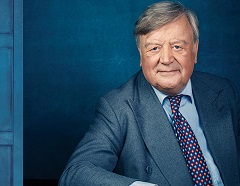 Last Wednesday morning I was listening to avuncular and clubbable former (or is it still current?) 76-year old Tory ‘Big Beast’ Ken Clark MP being interviewed on Radio Four. He opened by confirming that he would not be standing again as an MP in 2020.
He then went on to tell of how in the 1970s, when he first entered Parliament, the atmosphere on all sides of the House was akin to that of a gentleman’s club to which – perhaps after devoting a couple of hours to the day job, then having a three-hour lunch in an upmarket West End or Westminster watering-hole – one would saunter down at some point to spend the rest of the afternoon/evening putting the world to rights.
Yes, of course, (he went on) occasionally there would be some major crisis de jour and indeed the odd election or two, but everything then was so much more relaxed, ‘steady’ and easy to understand than it is now.
In those days the place was littered with big characters. Personal scandals were buried or hushed up – that is, if they ever came to see light of day at all – and somehow it felt as though the hurly-burly of political life was simply being carried on in a slightly-more modern version of its counterpart of two hundred years or more previously.
Contrast that with the chaos and frantic pace of life today!
It’s easily to be simplistic, but let me try to sum it up. Human life is all about learning how to survive – at birth, growing up, striving into adulthood, getting a job, then maybe parenthood etc. – and somewhere along the line creating the time and wherewithal to have time to yourself and enjoy the finer things. By our nature, human beings acquire the knowledge of how to live and operate in the world as it is … and then, the frustrating angle is, that very structure and process, which you’ve spent your life to that point getting to grips with, suddenly changes.
For example, if you once operated in a world where you went to church and – having entered a career or organisation – you were told you had to spend five years learning the ropes before you had a chance of gaining your first significant promotion … and then one day (out of the blue) you were informed that now God didn’t actually exist – all religion was de facto bunk – oh, and by the way, you no longer had to wait five years to gain your first significant promotion, the new rule was that both you (and the kid four years behind you) could both now get promoted inside five weeks … you’d feel a little hard done by.
Wouldn’t you?
Since the year 2000, British politics has become increasingly obsessed with the veracity of what our politicians say, both generally and in order to get elected. Paticularly, these days, the latter.
It’s a case of the classic ‘Do and I say, not as I do’ syndrome write large:
“Er … when I made this or that statement of my party’s policies on foreign affairs or welfare reforms – and then did exactly the opposite when I got into power – that was all down to practicalities and the need to deal with a crisis that suddenly hit us at at the time. But when [the party opposite] said one thing during the Election … and then immediately abandoned it when they got into office … that was an outrageous affront to a thousand years of political integrity, somthing that I and my party would never even contemplate, and should result in them being sent to the Tower for treason!“
Which leads me to another good piece by Andrew Rawnsley – a scribe always worth a read, in my view – that appears today on the website of The Guardian/Observer – MODERN POLITICS
