
The Queen’s Gambit /Walter Tevis
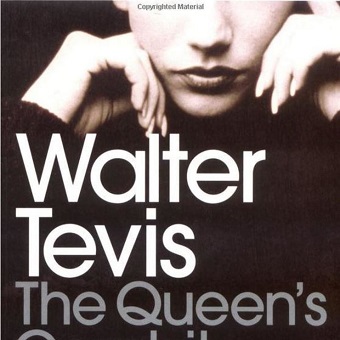
Chess fiction is something of a rarity. Stefan Zweig wrote rather a good one (Chess) about a prodigy on a liner.
 Walter Tevis was seemingly more interested in pool. He wrote The Hustler which became a superb film with Paul Newman.
The Queen’s Gambit is about Beth Harman, an orphaned child who rises to the top of the chess world.
Tevis makes some attempt to describe her games but chess is visual and unless you have some knowledge you may be in difficulty in following these.
Nonetheless it has other issues of orphanage, the mind set of a chess genius (Beth becomes an lonely alcoholic), prejudice against women, the Russian hegemony of the chess world broken by Bobby Fisher who curiously is never mentioned in the book.
It all made for a satisfying and engaging read especially as Tevis has some gift for characterisation.
 It would make rather a good film as discrimination towards women is such a leitmotiv of contemporary American filmaking.
Bombshell with Cherize Theron is the latest to be released.
The character of Beth is particularly well drawn.
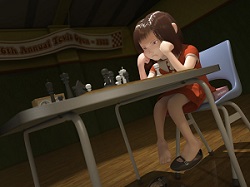 She is taught chess by the janitor of the orphanage.
She becomes US champion and challenges the Russian grandmaster and world number one Vassily Borgov.
There have been some notable women chess players, namely Vera Menschik who died from a bomb is London in 1945, and Judith Polgar.
None have been world champion.
Although a fiction writer primarily, Tevis has knowledge of chess openings, the great players and the extraordinary world that is tournament chess at the highest level.
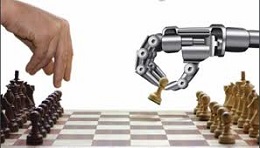 Sadly now the computer has taken control. You can ask a computer to select the best move. In a recent game on the net against a better player I played an imaginative bishop sacrifice to expose my opponent’s king.
There was a mate in there somewhere but I could not find it. My opponent played out of trouble to win but I suspect with the aid of the computer. In the 1970s, where this book is set, the Russians supported their best players during tournaments with rigorous analysis.
I would certainly recommend this book even to a non chess player.
