
Fight Game stuff
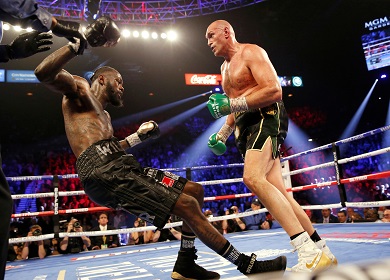
There’s no doubt that professional heavyweight boxing is on the up and those of us interested in the Noble Art are as pleased as anyone about the development because – echoing what they used to say in cricket back in the day (“a strong Yorkshire means a strong England”) – similar applies to the heaviest division in the fight game.
Incidentally, before we proceed any further and hopefully without getting bogged down in statistics and ‘anorak-land’ detail, I want to do a fly-by of the modern weight divisions both for the hell of it and because some Rusters glancing at this piece may be unfamiliar with them.
 [For present purposes I’m going to be dealing in imperial measures rather than kilograms].
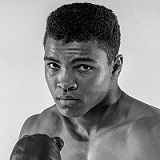
When I was kid – and I’m old enough to have been a young and impressionable teenager when Muhammad Ali (or Cassius Marcellus Clay as he then was) first burst upon the scene – my pals and I naturally knew them off by heart:
Let’s zone in on the subject at hand and begin from the welterweight upper limit (10 stone 7, or 147 pounds); middleweight 11 stone 6, or 160 pounds); light-heavyweight (12 stone 7, or 175 pounds); and heavyweight (above 12 stone 7, or 175 pounds, but famously “any weight” in the record books that mattered).
 The current list is as above, but with these additional sub-divisions included: light-welterweight (9 stone 9 to 10 stone, 135 to 140 pounds); light middleweight (10 stone 7 to 11 stone, 147 to 154 pounds); super middleweight (11 stone 6 pounds to 12 stone, 160 to 168 pounds); and cruiserweight (12 stone 7 to 14 stone 4 pounds, 175 to 200 pounds).
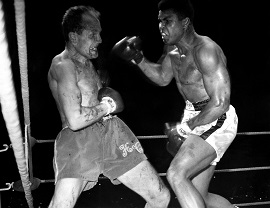
To get some perspective on this, when Henry Cooper fought Muhammad Ali for the world heavyweight title at Highbury on 21st May 1966, he weighed approximately 13 and a half stone.
At his peak, Ali weighed between 14 stone 9 pounds and 15 stone 5 pounds.
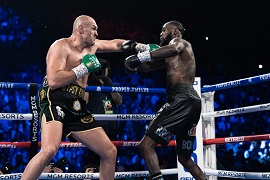 Compare those weights with those of the participants in the most recent high-profile heavyweight bout between Deontay Wilder and Tyson Fury at the MGM Grand Garden Arena, Paradise, Nevada on 22nd February 2020.
Wilder (6 feet 7 inches) weighed in for that one at 16 and a half stone (or 231 pounds) and Fury (6 feet 9 inches) at 19 and a half stone (or 273 pounds).
Which brings me to the subject of Tyson Fury – the “Gypsy King” currently bestriding the world as the unofficial greatest pro heavyweight of all – whose well-known back story includes the depths of near-suicide and a personal fight-back from all kinds of mental and physical problems to eventual redemption and his recent ascent to Mount Olympus and global celebrity.
 At a private social function last week I listened to two gents who had the advantage of me in that they had seen a recent UK television documentary on Fury and were waxing lyrical about how impressive a figure Fury had been in it.
One mentioned something in it which I had not heard before – apparently after his first (drawn) fight with Wilder, Fury had given away his entire fee for the fight (US$9 million) to local poor people in the vicinity of the fight venue.
The other detailed two other incidents of Fury – undoubtedly a one-off and charismatic character despite his well-publicised homophobic and sexist comments that have prompted widespread condemnation on social media and elsewhere – behaving magnanimously and/or with compassion and concern for those less fortunate than himself.
 The thrust of my fellow conversationalists’ comments was to the effect that, whilst Fury may be something of a “Marmite” figure, there was indeed something compelling and attractive about him.
They were both also of the opinion – if their potential “showdown” fight should ever come to pass – that Fury would toy with Anthony Joshua before beating him out of sight.
That may be, for all I know.
However, today to something more worrying and unsavoury: the revelations overnight in the media about the backdated two-year ban from boxing for steroid abuse that Fury received in 2016 after running a defence that he had inadvertently regularly consumed infected wild boar meat during a specific training period.
According to a piece by Guy Walters for today’s Mail On Sunday, all may not have been quite what it seemed at the time – see here, as appears today upon the website of the – DAILY MAIL
