
The Art Mysteries (BBC4) Waldemar Januszczak
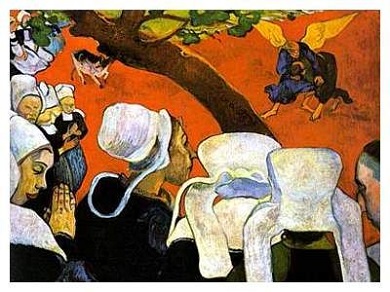
Every Wednesday evening on BBC4 Waldemar Januszczak unravels the mystery of a painting and last night it was Paul Gauguin’s Vision After the Sermon.
The picture depicts Jacob’s famous wrestle with the Devil in the bible, symbolises good and evil before a congregation in a small church. There are two figures clearly delineated: one a young woman, the other a middle-aged man.
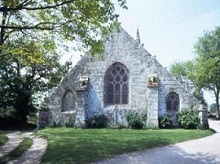 Janusczak gets to detective work.
The church is not, as generally thought, in the artist colony in Brittany of Pontaven but nearby in a small chapel at Tremalo.
The man is Gauguin and the young woman Madeleine the beautiful young sister of artist Emile Bernard with whom Gauguin was smitten.
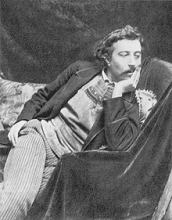 Gauguin had left his Danish wife Metta in Copenhagen. Her family were disapproving that Gauguin had given up his day job as a stockbroker.
He tried his hand as a tarpaulin salesman but fortunately for us gave that up for painting. After Pontaven he headed down south in France to Arles where he set up home with Van Gogh. After that he went to Tahiti where his paintings of local native women were to establish his reputation but not in his lifetime.
Janusczak also establishes a connection in the painting with Victor Hugo’s Les Miserables where there is also a Madeleine character.
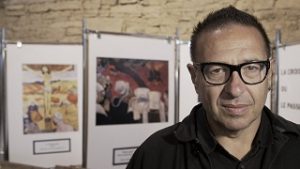 Bulky with a radio face, Januszczak is not your suave dapper art connoisseur but he knows his stuff. He produces and directs the programme.
In 30 minutes he has to cram quite bit in. I would have liked more on Gauguin’s life – I never knew his father was the French consul in Peru where he spent his childhood.
We do get many images of this sumptuous paining: Gauguin was a rich colourist redolent of Matisse. Very recently his reputation has suffered with his dalliances with under age Tahitians with whom he consorted and painted.
One may have been 14 but two years later she was married with 2 children. He should be judged as much by the morals of those times as these. He was a considerable artist in the pantheon of post impressionists alongside Degas and Manet.
