
The Plot Against America (in a film context)

The editor also asked me to post a review of The Plot Against America putting it in a film context.
The two memorable films on this subject of creeping fascism are It Happened Here (1966) and Vittorio de Sica’s last film The Garden of the Finzi- Continis (1970).
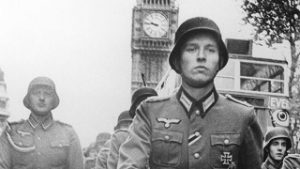 It Happened Here was a black and white film based upon an invasion of Britain and occupation by the Nazis.
It was made in black and white and to my knowledge has not been repeated recently.
The director was Kevin Brownlow.
It was a chilling story of acquiescence around a nurse who is conflicted by her duty and the reality of a harsh Nazi occupation.
I recall being scared but it’s a gritty piece of realism.
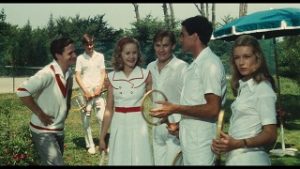 The Garden of the Finzi-Continis is set in Ferrara in 1943.
A rich and aristocratic Jewish family hold tennis parties for Jewish friends who are banned from the local tennis clubs.
The walls of their palatial house are symbolic, excluding the reality outside them but providing a false security. Eventually they are all rounded up.
It stars Dominique Sanda and Helmut Berger.
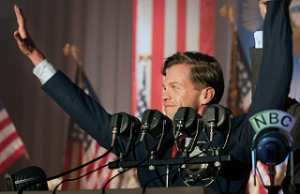 The very well-acted The Plot Against America captures both themes of grim reality and false security.
I suspect too it’s message is anti-Trump with his ‘America First’ ideology.
Whilst Herman Levin (Morgan Spector) rails against Lindbergh he does precious little unlike his sweet wife Bess (Zoe Kazan) who wants to emigrate to Canada and nephew Alvin who takes the Nazis on by enlisting in the British army and loses his leg .
Strangely enough the issue of when to get out came back to me last week when I received an email from a relative who in lockdown discovered a letter to her grandfather – my great grandfather – who was a man of multifarious business interests in the Thirties in Berlin with seven children.
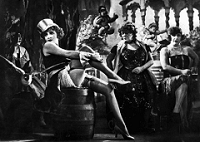 He owned a cinema which he sold at a loss and it appeared from the letter from a lawyer that the buyer had made a successful claim for war damage.
I could shed no light on this but was intrigued by this cinema which would have shown Fritz Lang’s two classics – M and Metropolis – as well as Josef von Sternberg’s The Blue Angel.
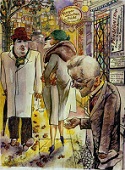 Berlin in the early 1930s was fertile artistically at the time with painters Max Beckmann and George Grosz rejecting Expressionism with their New Objectivity moment.
Architect Walter Gropius was also around then.
I guess my great grandfather, who finally emigrated to Bournemouth, felt like Herman Levin in that he was a national and the Nazis would not last. How wrong he and Herman Levin were.
 Finally I must praise creators Ed Burns and David Simon for their production values and casting.
I was particularly impressed by John Torturro as Rabbi Lionel Bengelsdorf who adopts President Lindberg’s initiatives of camps for Jewish boys and displacement of Jewish families without seeing the bigger picture of creeping fascism.
