
The art of being paid your true worth

As preachers might say “My text for today is …” a report by Bhvishya Patel upon remarks chippy made by Sarah Sands, the departing editor of Radio 4’s Today programme, about the disparity in salaries between BBC presenters and other staff who contribute to programmes – see here, as appears today upon the website of the – DAILY MAIL
 It is only to be expected – and perfectly natural human behaviour – that anyone seeking advancement in their career, e.g. a promotion or more money, will deploy any argument and/or evidence they can muster which supports their case, whether it be logical, vague, incontrovertible, whimsical or absurd.
Ostensibly there is absolutely nothing wrong with this and indeed one might argue with some justification that, if you yourself don’t believe you are worth more that you are currently paid, why should anyone else?
That acknowledged, there is no organisation in the world whose employees live in a greater bubble of overwhelming sense of self-importance, hypocrisy and self-delusion than the BBC.
Three decades and more ago, when I worked for a company in the ITV network, we used to laugh at the antics of programme-makers at the Beeb.
 It is fair to admit that in those days ITV was neither a paragon of virtue nor indeed immune to the ‘no holds barred’ cut and thrust of the commercial jungle.
Legion were examples of light entertainment artistes, news and current affairs producers, reporters and presenters – never mind anyone else – who had been carefully ‘brought on’ by BBC graduate schemes, then earned their spurs on minor programmes before being promoted to iconic series within the Beeb’s flagship output … only immediately to get ‘poached’ by one of the fifteen ITV companies waving (for example) a salary offer of 50 to 100% more than the BBC could afford or was prepared to pay them.
As they say, all’s fair in love and war.
Inevitably, however, those long-serving BBC programme-makers who for whatever reason did not get ‘poached’ by ITV in this fashion did not take their misfortune lying down.
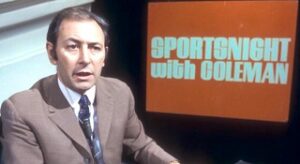 Central to the beliefs of everyone at the BBC was – probably still is – that their employer’s reason d’etre was not only to be “The Voice Of The Nation” but also to produce ‘gold standard’ output across every genre of programming from sport to news and current affairs, education, drama, children’s and … er … Uncle Tom Cobley and all.
Ergo, it was argued, for example, that the BBC had to bid money it couldn’t necessarily afford in order to buy or retain key sports broadcasting rights, simply so that ITV or any other broadcaster wouldn’t snaffle them up and thereby gain not just greater national prestige but possibly also greater audience shares and then profits by doing so … which might then allow them to ‘buy up’ even more of said sporting rights and indeed the BBC people who made excellent and popular BBC programmes.
Coming down the scale a notch, a similar argument soon became ubiquitous amongst BBC producers and top programme-makers making their cases for increased salaries.
 [The following is a hypothetical example to illustrate].
Thus a BBC light entertainment producer, perhaps previously perfectly content earning a salary of £XX,000 per annum, would point to an instance of a colleague of similar stature to himself being ‘poached’ by an ITV company for (say) 50% more money … and make the argument to the relevant quarter in the BBC hierarchy that – if said colleague could – he could also make 50% more money in ITV, were he to be ‘poached’ … and, since 50% more money was clearly “the going rate” in the rest of the industry, the BBC should now pay him 50% more in order to ensure he didn’t bugger off and join ITV at the earliest opportunity.
 You get my drift.
Similar arguments were soon being made at all levels of the BBC – this despite the fact that there was an obvious “push back” argument in the wings:
“Okay, but since de facto ITV hasn’t come in to ‘poach’ you, as night follows day the only conclusion to be drawn is that they don’t think you are good as your colleague that they have ‘poached’ … and therefore you aren’t worth any more than you’re already being paid!”
 My point is that people like Sarah Sands who make arguments that BBC producers and others who work hard for relatively small salaries (e.g. compared to what is paid to Garry Lineker’s £1.75 million for his presenting work) should presumably be paid a lot more fail to appreciate the fundamental rule of the commercial jungle, i.e. that there are no laws in the commercial jungle.
I’m no spokesperson or apologist for Gary Lineker, but my penny to a pound would suggest that if Mr Lineker wanted, he could easily step down and do the job of any reporter, researcher or producer in the BBC’s sports department … whereas very few BBC reporters, researcher or producers would be capable of doing all the presenting work that Mr Lineker currently does for the BBC, or indeed would want to (not least because of all the extraneous pressures that doing it attracts).
And even if they were, they certainly wouldn’t attract the same popular audience ratings as Mr Lineker.
