
English rugby: waving … drowning … or what?

And so the 2019/2020 English professional rugby union season came to its protracted end last night in the virtually-empty vastness of a cold, windswept, monsoon-lashed Twickenham Stadium with Exeter Chiefs completing an epic Double of winning the top European club cup competition and overcoming Wasps 19-13 in the English Premiership Final.
 This was a well-deserved triumph for the West Country team that just ten years ago wasn’t even in the top tier of English rugby and one that justifiably warms the cockles of the hearts of rugby traditionalists the length and breadth of the nation and – to an extent – sticks a hearty two fingers in the air at those that control and administer the elite professional game.
 Drawing inspiration from one of my favourite poets (Elizabeth Browning 1806-1861) – specifically by adapting her offering How Do I Love Thee? (Sonnet 43) “… Let me count the ways …” – I shall now list some of the reasons why.
Saracens FC, long suspected of playing fast and loose with whatever the Premiership’s “financial level playing field” rules were at any time since the game turned professional, were finally exposed to public scrutiny and punished by being docked 35 points and being fined £5 million – thereby being consigned to relegation to the Championship for next season.
Let’s be honest.
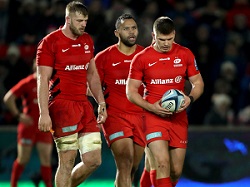 Nobody could deny either that Nigel Wray’s Sarries had created an enviable and highly successful structure and culture of excellence at Allianz Park, or that – to be fair – the majority of Premiership clubs had probably also at various times (to some degree or another) also infringed most of the somewhat vague and easily-skated-round Premiership rules on salary caps and financial probity (“If everybody else is getting away with it, why shouldn’t you if you want to win?”). But, as the most glaringly obvious example of the art, nobody cried any crocodile tears at Sarries’ eventual downfall – and it was perhaps fitting/appropriate that the old-fashioned Exeter then ascended to the heights this season.
 The Chiefs are grounded in their fiercely proud and competitive rugby community.
Their director of rugby Rob Baxter – a former stalwart of their playing ranks – is a local man who has instilled an amazingly resilient rugby culture at the club in which sheer graft and team spirit counts far more than any superstar mercenary name that other clubs have regularly brought in from around the world. Exeter’s similar are carefully recruited for their humility rather than their box office appeal.
 They are well-drilled, play hard ball in every area on the field, incisive in attack and (above all) simply relentless. They’ve never got ahead of themselves and it has now taken them to the summit of European rugby. Good on them!
Meanwhile elsewhere English rugby – overseen by the hapless RFU – is in a dismal state.
The Championship (second tier) is floundering in debt and receives far too little financial and other support from the governing body.
Below that – way below, some might say – what is called “community” or “grass roots” (amateur) rugby is now a tiny afterthought in the minds of those at “HQ”. Community club leaders are united in their condemnation of the way the RFU is conducting itself by cow-owing to the elite professional game – spraying money in every direction but that which would ever attract mass numbers of youngsters to a sport which professes itself as having the goal of developing itself worldwide.
Fat chance, the way it is currently being run by World Rugby and at national level, certainly in England!
 Despite a pronounced ability to deny everything and virtually call black white if necessary, the RFU has let the elite professional clubs get away with far too much – not least by paying them ludicrous amounts of cash simply to have access to potential international players; it has squittered money away on paying its top people salaries way beyond what was reasonable and then (as usual) on various folies de grandeur and jolly home and away trips for its top brass to big matches and dinners.
And it is now losing money hand over fist in the “brave new world” of spectator-less sport.
As a direct result the Sevens version of the game – and to an extent the Womens’ also – have been treated abominably.
The begging bowl is out …
Where is it all going to end?
