
Morozov/Natalya Semenova

Generally there are two types of reviewers: those that use a book review to illustrate their own knowledge of the subject and those that seek to show why said book might be of interest or enrichment to the reader.
 Most of the reviews of this biography of the Morozovs I read fall into the first category.
The Morozovs were an extremely wealthy Muscovite family of the nineteenth century who owned cloth producing factories.
Mikhail Morozov, the eldest of three brothers, was a lover of the good things of life and paid for it by dying aged 33.
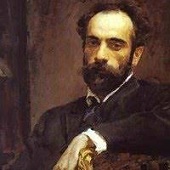 He was the first of the brothers to collect but the real genius was the middle brother Ivan.
Through Parisien dealers Paul Durand-Ruel and Amboise Vollard he acquired an extraordinary collection of Impressionists and Post Impressionists.
His great artistic love was Paul Cezanne, of which he possessed 18, but he also acquired Degas, Monet, Sisley, Gauguin, van Gogh – including The Night Cafe – and an unsigned picture of The Acrobats featuring a harlequin by an unknown painter called Picasso.
He was to acquire many more through Henri Kahnweiler who dealt for and in Picasso.
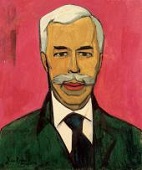 At the time of purchase many of his acquisitions of now Master status were by artists neither acclaimed nor popular then.
His collection was only rivalled by another textile magnate Sergei Shchukin whose great love was Matisse.
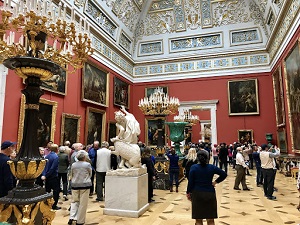
To this day the finest collection of this period is to be found in Russia in the Hermitage.
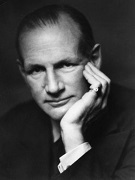 Another textile millionaire Sam Courtauld acquired Manet’s Bar at the Folies Bergeres and Dejeuner sur L’Herbe, both still viewable in Somerset House.
Ivan Morozov had an incredible eye supported by deep pockets.
Sadly Natalya Semenova does not provide currency equivalents but I would guess the 50,000 francs that Morozov customarily paid for a picture would equate with £50 million now.
He also commissioned murals painted in his Moscow mansion by Maurice Denis (cost 70,000 francs) and Matisse.
 Initially the First World War generated more output and revenue for the Morozov factories but, come the Bolshevik revolution, French art was considered decadent and appropriated by the state.
Morozov became an employee in his own museum and died in Carlsbad bereft of his fortune and collection.
Shchukin was cleverer in exiting. The two collections were merged and now mostly exist in the Hermitage.
Collectors fascinate me.
They are quite different from dealers and connoisseurs and the mega rich, for whom a painting is another symbol of their wealth.
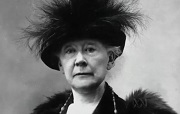 There were 4 other American collectors of note in the time of the Morozov brothers: Gertrude and Leo Stein, Alfred Barnes – who made his fortune in pharmaceuticals – and Mary Cassatt.
This is why so many Impressionists are to be found in the States though the best are in Russia or Musee d’Orsay.
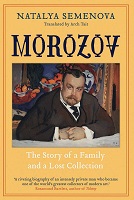 This is a short work of 300 pages. The translation is sometimes clunky and there is too much detail on the Morozov early generations whilst the final years of Ivan are somewhat dashed off.
I would have liked more illustrations of the works bought. The only error I noted was the reference to Degas as an impressionist
The flaws are however minor in this impressive tribute to one of the great collectors and collections of the Twentieth Century.
