
Tate Britain v Tate Modern
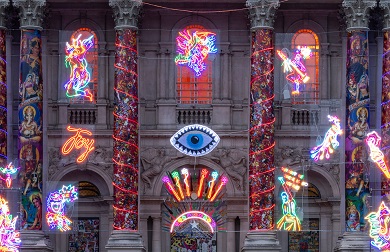
Yesterday our art art tutor gave us a curated tour of Tate Britain.
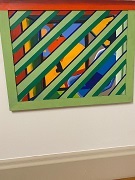 Before writing this I visited the Tate website to see how this clarified the difference between Tate Modern and Tate Britain.
This explained that Tate Modern was the more international and contemporary.
Tate Britain – as it says on the tin – is more concerned with Britain.
However the tour impression was that this not really the case.
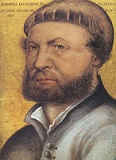 The problem for Tate Britain is that before the age of the Gainsborough, Joshua Reynolds and Constable the notable artists were not British.
As examples, consider these: Hans Holbein, Antony van Dyke, Zoffany and Canaletto.
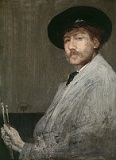 Even after this golden age of English painters came the Americans John Singer Sargent and James Whistler.
And then Mark Rothko.
On time periods, the difference between both Tates was not so clear cut: there were The Ives Group and a Francis Bacon and John Minton in Tate Britain that could have appeared in Tate Modern.
The Museum in Millbank is older and more poorly lit.
In some galleries three pictures were hung from floor to ceiling and the uppermost difficult to appreciate because of the light.
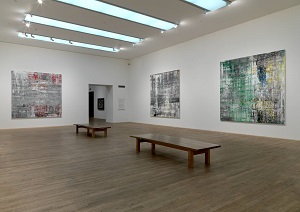 I was looking forward to the Tate Britain trip more than the Tate Modern but, travelling back with the art tutor, we agreed that Tate Modern had been more satisfying.
They took more risks and there was nothing in Tate Britain to compare with the two rooms of Picasso, Klee, Dali, Jackson Pollock and the one room of Richters.
My assessment that the best of “British” art was, by comparison, second division stuff.
 This is not to dismiss it altogether.
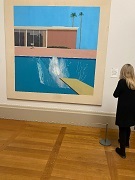
A huge work by Stanley Spencer and the David Hockney swimming pool, Howard Hodgkin and a roomful of Rothkos and all the Sargents on view were worth the non admission money alone.
A few other points:
Both Tates were poorly-curated in the picture descriptions.
Theses had too many “maybes/could be”s.
Better to place the oeuvre in the corpus of the painter’s work.
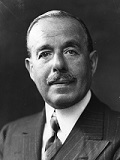
Sir Joseph Duveen
I also noted at Tate Britain that the Sackler family, who made their fortune out of opioids and now the subject of a highly critical film, appeared as generous donors.
Some of the rooms are named after and by dealer Sir Joseph Duveen who worked a scam of attribution and non-attribution with art historian Bernard Berenson as the art market dictated.
