
Sickert/A Life in Art – Walker Gallery
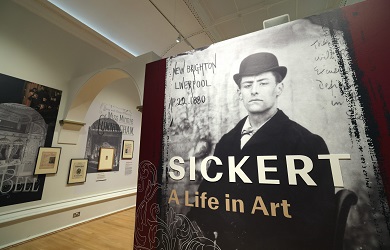
Yesterday I travelled up to Liverpool to view the Walter Sickert exhibition at the Walker Gallery.
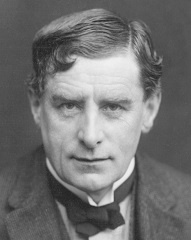 There are two misconceptions about Sickert – that he was quintessentially English and that he was our leading post-impressionist.
In fact he was born in Munich in 1860 of Danish and Irish parentage and the family did not move to Britain until 1866.
Although influenced by two foreigners – James Whistler and Edgar Degas – he was his own man and, like many a fine British painter, difficult to classify. Fauvism, futurism, cubism, expressionism all happened in his lifetime but you could not compartmentalise his body of work
His reputation was avant-garde.
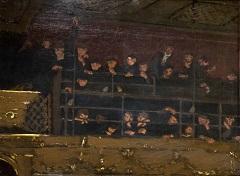 He started his career as an actor and he became well-known for his depictions of music halls like the Bedford in Edgware Road and its leading players like Kitty Cunningham.
His work is characterised by being dark – so dark it was not always easy to fathom.
He began a composition with a quick sketch inspired by that supreme draughtsman Degas and the Walker possesses 360 of them, the most of any museum.
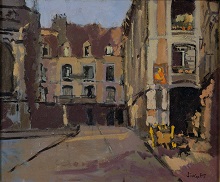 He painted six commissions of the Hotel de la Plage in Dieppe where he spent a lot of his life.
These were rejected and you can see why as no doubt the owner was seeking more enticing views of Dieppe for his hotel.
Sickert was a keen observer of life and painted it as he saw it.
His most famous picture Ennui features a bored couple.
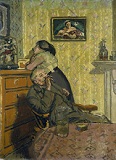 The husband draws pleasurably on his cigar with a glass half-full on the table whilst the wife looks extremely bored in the corner.
The composition is compressed as only half the mantelpiece is on view, which provides a stuffy, claustrophobic feel.
No one could depict atmosphere better than Sickert.
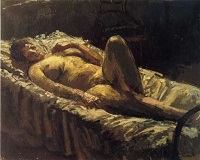 The dark side of Sickert really was best displayed in his Camden Town pictures.
He was fascinated by low life.
The nudes are more anatomic than erotic and reminded me more of a Lucian Freud and probably influenced him and another Camden Town painter Frank Auerbach.
The exhibition was well curated by Charlotte MacDonald with a particularly interesting film on the artist produced by Hannah Rothschild.
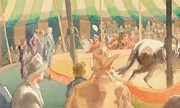 As is so often the case, the curator promoted Walter Sickert’s third wife Therese Lessore as an underrated formative influence.
Certainly her pictures were striking, but let’s not get carried away.
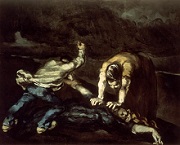 There are some pictures well worth seeing in the permanent collection, notably The Murder by Paul Cezanne hung alongside a Degas, Lucien Pisssarro, Courbet, Matisse and Singer Sargent.
Finally I must mention how easy it was to access Liverpool.
I bought a first class advanced fare for £ 72 each way. It proved a most comfortable experience with food and drink served on a journey that took just over 2 hours.
