
Late Mozart and The Rest is History
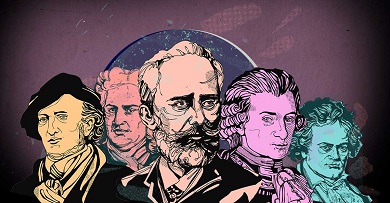
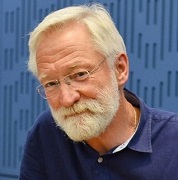 One of my favourite presenters is Donald Macleod who on Radio 3 at midday presents The Great Composers.
Occasionally it will be a composer of whom I have not heard but, as often as not, I have.
 Last week he covered the late period of Mozart’s life.
For me, Mozart is the greatest of them all on the basis he could compose them all – operas, symphonies, concerti, requiems and choral works.
No other composer can claim such a diverse canon.
By the end of his life Mozart had ended his collaboration with Ponti and composed the more serous opera Tito da Clemenza.
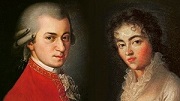 He had an extravagant life style, being particularly partial to expensive clothes and his wife Konstanza liked high end spas.
There is a personal memory here.
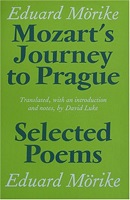 At school for our A level we studied Mozart’s Journey to Prague (by Eduard Morike) alongside Goethe and Schiller, and three of us loved this somewhat precious story of Mozart’s coach journey to Prague for the premier of Don Giovanni.
One of the three (Paul) I have hardly seen since then but I heard he published a humorous potboiler.
I feel sure that if I met him again we would soon be laughing over one of the lines:
“Die innungskniffe Sind das wenigste dabei” [translation: “The shenanigans of the guilds are the least of it.”]
One when asked to translate, Paul for verflucht (cursed) he offered ‘Oh bugger”
I recently downloaded the book but the old magic of reading it in form 6B (modern languages) had gone.
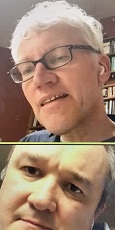 The Rest Is History is is a podcast presented by Tom Holland and Dominic Sandbrook.
I always feel podcasts are like being cornered by a bore in the pub but this one came well-recommended and seemed an agreeable way of getting through the festive period.
The one on post-War Germany was especially interesting.
We may think we had it tough – then and now- but consider the Germans: their country was divided, 9 million males were prisoners still in captivity, the cities were reduced to rubble but within 20 years they were an economic superpower.
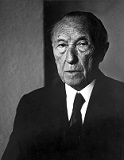 I learned that the architect of modern Germany – Konrad Adenauer – who had been deputy mayor of Cologne in 1907, was older than Hitler and not much younger than Churchill and at 90 he was still leading the party; that Helmut Schmidt fought at Stalingrad and the Battle of the Bulge and then later went on holiday with Gerald Ford; and that 8 out of 10 working in the Ministry of Justice in the 1950s had been Nazis.
It is indeed a remarkable country and though Hitler, like Mozart, was Austrian they can still claim Durer, Casper David Friedreich, Cranach, George Grosz and Otto Dix, Die Blaue Reiter and the modernists Joseph Beuys, Anselm Kieffer and Gerhard Richter.
 This podcast explained how intensely nationalist Germans are still including many of these painters and by no means feel Nazi remorse.
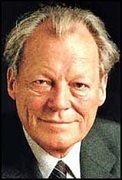
Willy Brandt (not his real name) kneeled before the monument to the Warsaw uprising and this gesture of supplication was not appreciated by Das Volk.
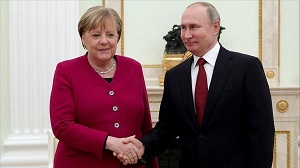 I also learned that outgoing chancellor Angela Merkel had a weekly conversation in Russian with Vladimir Putin.
Many of the chancellors led colourful lives.
Brandt was a womaniser and heavy drinker; Gerhard Schroder had 5 wives, each younger than the last; and even Helmut Kohl – not the most exciting of individuals – married a much younger woman at the end of his life who ostracised all of his family.
