
The One and the Other/Philip Kerr

This novel – written in 2006 but published after the author’s death – reflects the best and the worst of Philip Kerr.
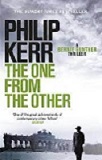 The best?
His sense of location, his knowledge of the Third Reich and the creation of the “Good German” cop Bernie Gunther.
The worst?
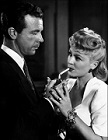 The failed attempt to emulate Raymond Chandler with gumshoe slang and wise-cracking – and also the incomprehensible plot – which reminds me of the apparently true story of Edward Dmytryk, the director of the 1944 movie Farewell My Lovely, asking Chandler who killed the chauffeur and Chandler replied that he had no idea.
This novel does unravel at the end but probably, like me, you do not know what is going on.
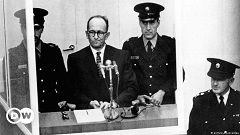 Kerr’s novels are always informative and you learn that Munich – not Berlin – was the crucible of Nazism, and that the Catholic Church set up ‘rat lines’ to ensure that Nazi war criminals like Adolf Eichmann could escape to Argentina.
[Spoiler alert]. The action takes place before and after World War Two when two Nazis involved in hideous experiments on human concentration camp inmates for malaria set Gunther up so he takes the rap and they can escape to Argentina.
The action is fast and furious but what is going on?
 The March Violets was the first publication in the Bernie Gunther series and generally acclaimed as the best.
The publishers and author wanted to maximise the appeal and Gunther subsequently appeared in Cuba and as a hotel detective on the French Riviera.
Kerr – a keen Arsenal fan – also wrote some football-based thrillers with a manager – Scott Manson – playing the detective.
Rather like the film The Desert Fox (1951), where James Mason provides a sympathetic portrayal of Irwin Rommel, Kerr can only be congratulated in creating a Good German and an attractive fictional character.
