
The End of The Affair/Graham Greene
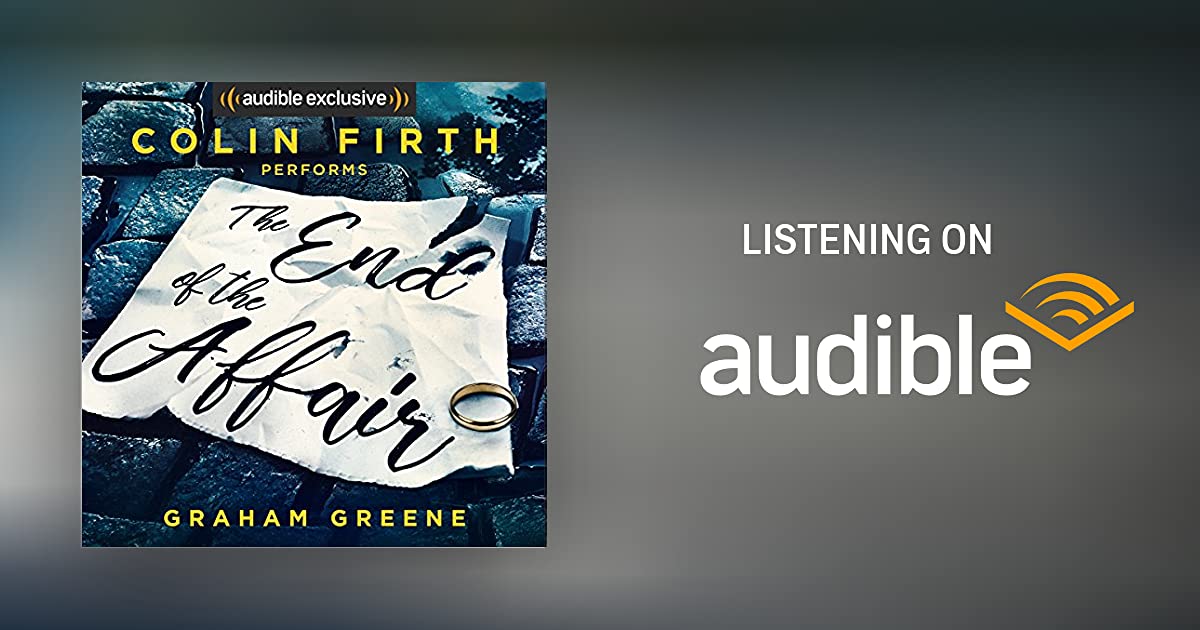
My late mother read this novel when pregnant with me.
 I still retain her copy but I have just re-read it via audio book. The narrator was that excellent actor Colin Firth.
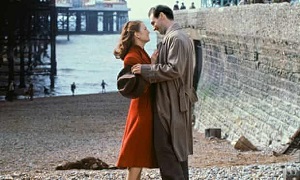
That narration is in the “I” form and that of Maurice Bendrix, an author himself, having an affaire with Sarah Miles who resided the other side of Clapham Common with Henry Miles, a civil servant .
 The story takes place during the Blitz in World War Two.
The novel was first published in 1951.
Bendrix is not so much an unreliable narrator as an unpleasant one.
He, as a novelist is likely to based on Graham Greene, and is contemptuous, dismissive and a philanderer.
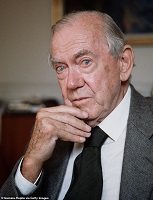 Greene himself had many affairs and sexual liaisons but never divorced his wife probably because of his Catholic faith.
Faith plays an important role in all his novels and here it grips Sarah who was baptised a Catholic aged two.
Sarah’s character is viewed from several angles.
The main one is Bendrix’s, but there is also a journal kept by her which Bendrix obtains and reads.
There is rather a comic private detective called Alfred Parkis, an endearing character whose boy is cured by her faith healing, as is the affliction of another of her lovers, Smythe.
 There is also her mother who is continually tapping everyone she meets for money.
I cannot think of too many novels about extra marital affairs – obviously Madame Bovary is one.
In some ways this a is a period piece – the time it was set a more formal London of lunching at your club.
However the writing, perception and humour make it an enjoyable read.
One element of Greene’s writing which does cause offence is his depiction of Jews.
 One of Mrs Bertram’s three husbands is a Jew and he is spoken of in the trope of being mean – no doubt fed up with her constant financial requests.
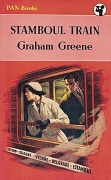
The reference to a Jew in Greene’s Stamboul Train has attracted wider disapproval.
This might stem from his high Catholic faith which has inspired many an English writer – Evelyn Waugh and Piers Paul Read to name but two.
There is obviously too a fine Catholic tradition of Irish authors.
For me Greene – as much for for his breadth as perception from vicious crime in Brighton Rock to espionage (The Third Man) to humour (Our Man in Havana) – is rightly esteemed as one of the great English-writing authors of the twentieth century.
