
A moment in time
Like I suspect many Rusters I have spent of the period since the 2020 coronavirus era hit the UK continuing to do that which I did before, viz. tootling around on the internet in search of entertainment and/or enlightenment.
This is the first of an occasional series on music-related items that I’ve come across in recent months that hopefully may be of interest to readers.
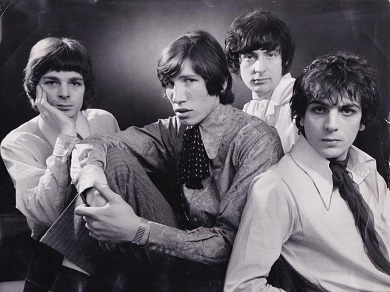
Nobody from the baby-boomer generation – roughly those born between 1945 and 1965 – can be unaware of the iconic British band Pink Floyd so here I intend to provide only a fly-by and inadequate version of their history.
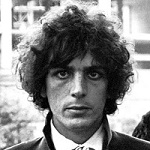 Founded in London in 1965, their original line-up was Syd Barrett (guitar, lead vocals), Roger Waters (bass, vocals), Nick Mason (drums) and Richard Wright (keyboards, vocals).
In their first two years, under Barrett’s leadership, they produced a couple of chart hits and a well-received first album The Piper At The Gates Of Dawn featuring a mix of quirky/weird songs, musical experimentation and psychedelic-based live performances that brought them a cult following.
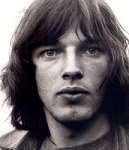 In 1967 – a seminal moment – having become unreliable through drug and mental issues, Barrett was ejected from the band and replaced by talented guitarist Dave Gilmour.
The ‘new’ team developed to become a mainstay of the highly-successful ‘thinking man’s, arty’ progressive rock genre that dominated for a while.
Simultaneously its critics stereotyped it as self-important, self-indulgent ‘pomp rock’ that not only took itself far too seriously but was the antithesis of the fundamental spirit of rock & roll (i.e. teenage rebellion) – a view that eventually culminated with the ‘Punk’ movement beginning in 1976 that replaced it as the fashion of the moment.
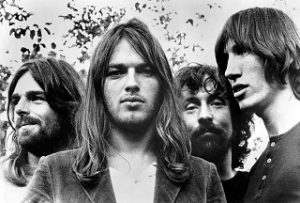 Not that Pink Floyd needed to worry.
The care and attention they applied to their music – and, some including me might add, the sheer quality and inventiveness of their musical development – had by then rendered them one of the most famous and successful bands on the planet.
Each new album was awaited and then greeted by faithful fans as if it were a new tablet of stone brought down from the mountain by Moses. Their ever-bigger and more expensive live shows toured the world to huge acclaim.
Eventually they disintegrated as personal tensions between Waters and Gilmour took their toll.
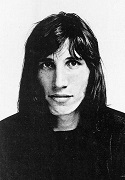 Waters, who had effectively taken over leadership of the band and become the main composer for some of Pink Floyd’s most famous and successful albums of the 1970s – The Dark Side Of The Moon, Wish You Were Here, Animals and The Wall – left the band in 1985 and the simmering feud between him and Gilmour has continued ever since, despite one-off occasions/events over the past thirty years at which they have informally reunited.
The Gilmour-led Pink Floyd carried on until the 1994 album The Division Bell. Syd Barret died in 2006 and Richard Wright in 2008. Today Gilmour is revered worldwide as one of the all-time great rock guitarists.
Today I offer video clips of two great Pink Floyd ‘moments’:
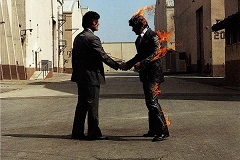 The first is of the title track of their 1975 album Wish You Were Here, ironically given their personal issues, a joint Gilmour (music)/Waters (lyrics) composition.
Though Gilmour and Waters deny it, some wrongly believe that it is intended a tribute to their former leader Syd Barrett: in fact, it’s just about missing somebody who’s no longer around.
On fans’ websites, many contributors testify to playing it at relatives’ funerals, or just when they want to think of someone they loved and no longer see – and also to being reduced to tears whenever they hear it.
Here’s a version of it being played by Dave Gilmour during an acoustic performance in 1994 – you may note that it’s been viewed 64 million times(!) – courtesy of – YOUTUBE
[Author’s tip: those who follow the link might also like to scroll down the YouTube page to see the various appreciative comments left below the video].
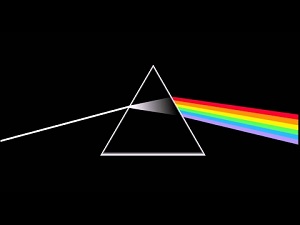 Secondly, there can scarcely be anyone who hasn’t listened to, bought, been gifted or at least heard of Pink Floyd’s concept album The Dark Side Of The Moon (1973), one of the most critically-acclaimed and successful of all time.
To 2020 it has sold north of 45 million copies worldwide and spent a record total 950 weeks in the USA’s Billboard Top 200 chart – including 741 consecutive weeks from 1973 to 1988.
It took eight months to make and much of it moves seamlessly from track to the next. One of its most famous is the Rick Wright piano composition The Great Gig In the Sky which features a female vocal without words.
 A British session singer Clare Torry was hired to come to the studio. The band explained the concept behind the album but she was left to improvise her contribution.
After several attempts and eventually apologising for her efforts she was surprised to discover the band loved them and an edited version was worked upon. She was paid £30 for her session and only learned later that her voice had actually been used when a friend – having bought the album – rang to congratulate her upon it.
Because of its improvised nature, the vocal is difficult to learn, supposedly covering a range of emotions from deep loss to redemption to soaring triumph/reaffirmation of the human spirit for which the band felt a female voice would be more expressive and appropriate.
Such is the devotion of Pink Floyd fans – and the nature of their music – that, even after the band’s official demise, there are many outstanding Pink Floyd tribute bands earning good livings around the world by recreating their music note for note.
 One of the most well-know is The Australian Pink Floyd that regularly tours in the UK.
Today, however, I have chosen a video clip of a British tribute band – Brit Floyd – performing The Great Gig In The Sky in concert, specifically because Polish singer Ola Bienkowska gives one of the best versions of the lead vocal I have heard.
See here – YOUTUBE
