
Basquiat, conceptual and abstract expressionism

In the last few courses we have studied Jean Michel Basquiat, conceptual art, essentially political slogans, and abstract expressionism.
For me the key point about all these is whether the artist understands the grammar of drawing, colour, form and composition.
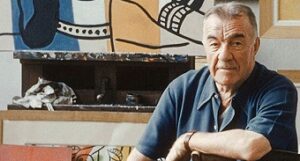 I draw a comparison with Fernand Leger.
A typical Leger is a red and green mechanised composition but at his Foundation at Biot, South of France his early work – such as a portrait of his aunt – reveals an immensely talented and more versatile painter.
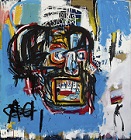 However I have never seen a Basquiat other than his trademark graffiti which reveals a different artist.
I was going to use the word diverse but it is because of diversity that he has achieved his reputation.
Abstract Expressionism is a different story.
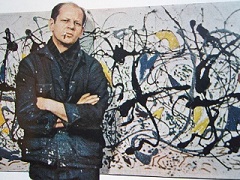 Again its context is ironic as the CIA had a cultural manipulation resource in the Cold War of which the left-leaning artists may have been unaware.
We studied both leading exponents of abstract expressionism – Jackson Pollock and Mark Rothko.
Pollock, a complex character, came from the Wild West and in a sense belongs to the erstwhile American history tradition.
Rothko was an emigre, and a depressive.
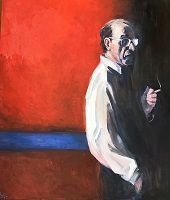 For many years I did not get Rothko but now appreciate the skilful way he diffuses paint onto the canvas.
With both painters, to appreciate their work best you have to immerse yourself in their paintings by standing close to them.
British museums do not have many Pollocks but there is a roomful of Rothkos in Tate Britain.
This is because he donated a series originally commissioned for the Four Seasons Restaurant in the Seagram’s Building.
Rothko took exception to only the rich viewing the works and so gave them to the Tate.
They arrived more or less on the date that Rothko took his life.