
Countdown to surrender/PBS
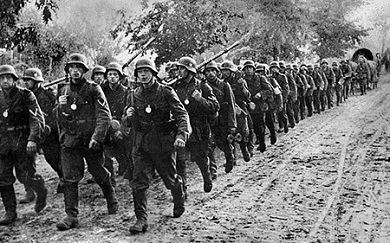
It’s an interesting issue as to why and how capably the German army fought in the latter stages of World War Two when there was little chance of successful resistance.
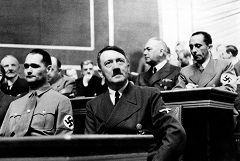 The answer was supplied in this excellent documentary.
The most telling reason was Adolf Hitler himself who not only thought the Wehrmacht would be successful but also that the Allies would divide amongst themselves.
On both counts he was wrong.
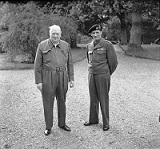 The division he anticipated between Russia and the Americans never came until after the War and indeed – to the extent there was disagreement – it was between Britain and the USA.
Churchill wanted to win the race to Berlin and Field Marshal Montgomery did not get on with Supreme Commander Dwight Eisenhower.
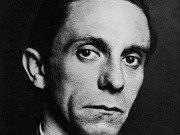 Another reason, harder to document, was that every German must have been afraid of reprisal given their conduct in occupied countries, especially Russia.
Goebbels stoked up this fear with propaganda depicting the Russians as beasts.
The Allies saw off Hitler’s last throw of the dice in his tank thrust through the Ardennes – the so-called Battle of the Bulge.
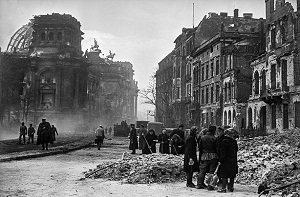 The V2 wrought terrible damage on London but did not break morale.
This documentary had contributions from Antony Beevor and German historians, providing a balanced view.
Having seen quite a few of these documentaries I have seen the newsreel footage quite often: Hitler inspecting and rallying the youth in Berlin, the Red Army rocket attack on Berlin and Hitler in the Berechtgarten.
“ What if?” is always an interesting game.
What if Hitler had been supplanted after the Normandy landings and a new leader sued for peace on terms better than those in the final capitulation?
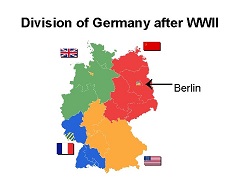 Given how quickly Germany had recovered economically by the 1950s I think that recovery might have come even quicker if the division of Germany had been avoided.
A more interesting potential consequence might have resulted if the Allies had won the Race to Berlin and General Patton had taken Prague as he easily could have done.
The whole Eastern bloc would not have remained in the hegemony of the Soviets till the late 1980s and therefore the post-war map of Europe and Cold War politics would have been quite different.
