
Defence is a no-win matter
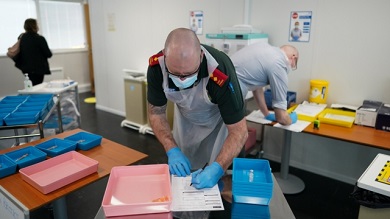
Today is the anniversary of the imposition of the UK’s first lockdown – a milestone that I’m sure most of us will not be celebrating.
During my overnight trawl of the newspaper websites I noticed a piece in The Independent detailing that apparently the nation’s total of 126,000 Covid-19 related deaths so far have come at a cost of 1.5 million years of human life lost (at an average of a decade per person). [I cannot vouch for the veracity of these numbers, I’m just quoting them].
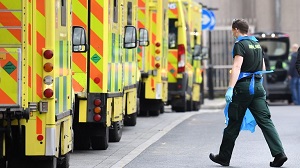 Amidst the snowstorm of news reports on the pandemic “third wave” currently sweeping across the continent, the EU’s increasingly desperate attempts to paper over the cracks of its failed vaccination roll-out, the rows over whether the holiday and hospitality industries should be allowed to “emerge from lockdown” (or not) – and the counter issue of whether in the current circumstances the majority of the public yet want to “go out and about” at all at the moment given their ongoing worries about Covidiots behaving recklessly and rogue variants of the virus potentially arriving and completely overturning the apple cart – it is sometimes easy to forget that there is anything else going on.
But there is.
Buried somewhere in the depths of media consciousness the consequences of Brexit are gradually working themselves out, distorted by the pandemic-dominated landscape, but still coming home to roost.
 One of 2021’s biggest events – postponed by a year – are the Olympics, still slated to be held in Japan in a few months’ time, albeit now denuded of all foreign tourists.
When it comes to elite sport – inevitably a short career for any human being – it is a singular honour to be selected for any Olympic Games and extremely rare for anyone to compete in three, so the prospect of losing an entire Olympic Games to reasons beyond anyone’s control would be a catastrophe especially when presumably thousands of individuals have been training for a four-year cycle just for the chance to make their national teams.
 That said, it does seem to me – with due respect to the Japanese organisers – somewhat crackers to be holding the Olympic Games this year. Especially with no overseas visitors. After all, half the joys and purpose of having the Games as a concept at all is the “festival” aspect of bringing together competitors from tens of different sports (and hundreds of thousands of spectators from over 150 countries) as a celebration of the human condition for the duration.
 It’s all going to be dreadfully soulless with just the home nation’s spectators, bedecked in face masks, doing their best to fill the stadia and other venues.
They might as well instead hold a “virtual Games” – featuring computer versions of the top twenty competitors/teams in each event on a giant E-games console and broadcast the algorithm-based results around the globe.
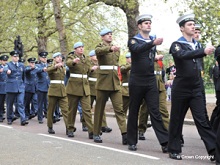 I don’t know if any Rusters noticed but yesterday the UK Government announced its latest plans for its armed forces based upon yet another tortuous and complicated review.
Deciding what to do about one’s military is one of the least enviable tasks known to Man.
It’s a no-win situation because inevitably there’s at least a 90% chance that “whatever you do or decide will turn out to have been wrong”. That’s the benefit of hindsight, of course.
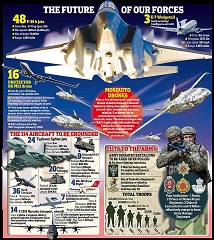 This is against a background in which – in an echo of the old adage that your brand new car has already lost 25% of its value the moment you drive it off the garage forecourt – when it comes to military hardware procurement and the length of time it takes to get from “placing an order” to actually receiving any brand new piece of military hardware in a fit operational state, it is almost inevitable that your “new pride and joy” is obsolete before it even goes into service.
Since time immemorial, history teaches us that – perhaps with the exception of those wars or battles “fought literally in the moment”- most warfare is conducted with the weapons and tactics that were (or would have been) most successful “last time”.
Why is that? The answer is simple. Technological means of warfare – and tactics – are constantly developing and evolving.
 Yet there is always a massive gap in the planning between what worked last time (or indeed didn’t) and what might work in the future.
In UK military history one of the great milestones is the Battle of Waterloo, fought on the 18th June 1815 close to the French/Belgian border.
The result could easily have gone either way but in the end the Brits – and their allies whose men made up well over half their troops that day – prevailed.
 And in that very fact was the seed of the problem for the future.
They say that half the reason for the lack of British preparedness for the Crimean War (1853-1856) was the fact that the “Old Nosey” – the original Duke of Wellington – lived until 1852: allegedly nobody had the cojones to propose any reforms to military practice, hardware and tactics whilst “the most famous man in England” was still alive.
Similar applied in the Edwardian era.
 Although the stunning effectiveness of machine guns against infantry was proved beyond doubt in the 1890s – not least by the British in Africa – right through the First World War the main British infantry tactic was still to advance out of their trenches in a strung-out line and at a walking pace, there to be mown down by traversing enfilade fire from the German machine gunners opposite spraying them with bullets like water from a hose.
There had been a comprehensive review of tactics in 1905/1906 after the lousy British campaign during the (second) Boer War of 1899-1902 which exposed the woeful lack of “future military planning” since 1875 but, yet once more, most of its lessons went unlearned or unheeded.
Yesterday, as I read the “brave new world” Government verbiage announcing plans to begin more military spending than ever since the Cold War – mostly on items like drones, robots, cyber-warfare and the like – I also heard the inevitable squeals of protest from former military commanders bemoaning the proposed reduction in “numbers of boots on the ground”.
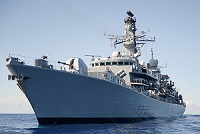 I smiled as I reminded myself of the surreal admission by the Ministry of Defence in March 2019 – ironically exactly two years ago this month – that the Royal Navy had 34 admirals but only 19 operational warships.
