
Doing it right
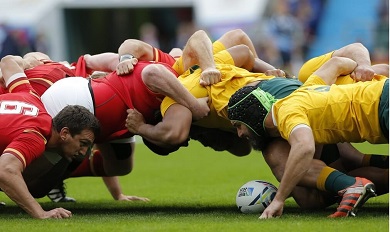
It is an inalienable fact of life that every sport known to man comes with a series of principles that define its culture and to an extent attracts participants that respond to them on one level or another.
There are also inherent differences between those which one might describe as individual sports and those which involve teams and today I want to examine some of the aspects that overlap between the two.
 Some sports – like track and field, whose World Championships are currently taking place in Doha – encompass both.
It’s essentially steeped in an internalised mentality approach because of its core mano-a-mano contests although there are ‘team’ aspects in its relays or where, for example, (as sometimes happens in middle and long distance events) two or three athletes from the same nation work together in pacing their assault on the medal places or seeking to ensure their ‘main man’ reaches the business end of the race in an advantageous position to win.
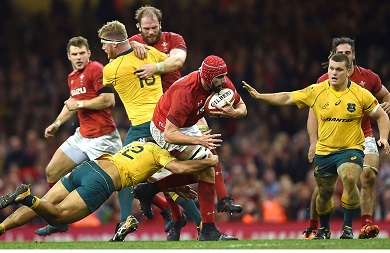 In contrast team games like rugby, despite having room for outstanding skilful players who can decide the outcome of a match by their individual brilliance, depend more than anything upon individuals combining together.
Down through history the greatest and most successful teams epitomise the admirable qualities of “playing for the team rather than yourself”, loyalty, reliance upon each other and ultimately, of course, “the whole being greater than the sum of its parts”.
An important aspect of developing a team ethic is that of both structured and informal bonding sessions.
I acknowledge I’m stating the obvious here, but this is the reason that rugby is such a great sport to play. It’s also why occasionally in the heat of battle things spill over into “handbags” and “afters”, springing from the team principle that “I’ve got your back if you’ve got mine”.
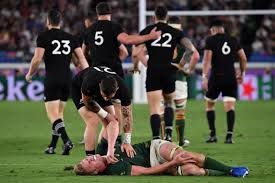 Rugby culture has always been built around the self-perception that its players are cogs in a machine, each of which have to do their bit efficiently and well to achieve a successful outcome and ultimately victory.
In any specific instance it could be the execution of a strategy, tactic or even a wholly impromptu move introduced off the cuff – whether that be to take advantage of an inherent weakness in the opposition team or indeed to release a lightning-quick wing threequarter into enough space to avail himself of all he needs – viz. a half-chance to outpace his opposite number.
This is not to minimise the importance of internalised mentality in team games, perhaps summed up in the stock media comments of coaches and captains, e.g. (pre-match) “We’re not so much concerned about the opposition, we’re concentrating on getting our own game right on the field; and (afterwards) listing the aspects of their game plan that went well or badly and then adding “We’ve got some serious ‘work-ons’ to put right now before next week when we ‘go again’ …”
 It takes a while for outsiders to fully understand the Kiwi culture when it comes to rugby and, if I’m being honest, there are also some popular misunderstandings and myths that get aired which aren’t necessarily true but which we don’t bother to take issue with because they tend to add to the mystique and – after all – every little helps!
It’s a stereotypical thing but we’re a small nation and it’s probably the case that every time a son is born the second thing that most parent wonder is whether one day he might become an All Black. A few of us are fortunate in that we do. It’s also true that when you first pull on that jersey you’re conscious that you’re but a temporary custodian of the number and you don’t want to be the one to let the history down.
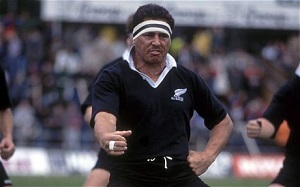 Sometimes people ask me about the Haka. Back in my day it fell out of fashion for a while and we performed it more often on tours because our hosts loved to see it than we did at home.
But then in the late 1980s Wayne ‘Buck’ Shelford came along and made the “Ka Mate” version a feature of All Black culture and national identity and – you might say – we’ve never looked back.
Whether you’re the New Zealand Prime Minister, a regional Maori leader or the janitor in a secondary school, the history and the sanctity of the Haka currently in vogue is important and part of your heritage.
And it’s not just a party piece, we really mean it.
 These days the impact of James Kerr’s book Legacy: What the All Blacks can teach us about the business of life – 15 lessons in leadership has been taken up in business schools and team sports cultures around the world and is not to be under-estimated.
For me, its key message is the importance of humility and self-belief in preparing to meet life’s challenges, even though some if it is a little far-fetched – but (as I indicated earlier) it ‘reads well’, so why should we quibble about that?
See here for a link to a typical review – by Liz Hanson of the organisation Athlete Assessments – LEGACY
And now, as this weekend we approach the conclusion of the pool stage in the Rugby World Cup – “Not the beginning of the end, but the end of the beginning” in Winston Churchill’s famous dicta – we are on the verge of the serious business.
It is a feature – I think in a good way – that rugby’s World Cup tournament lasts so long. The physical contact nature of the sport requires that teams really need a week between games simply to recover from the one to the next. Yet that fact also allows the coaches to plan for the long term and the accompanying enforced team changes that injuries and other setbacks impose from time to time.
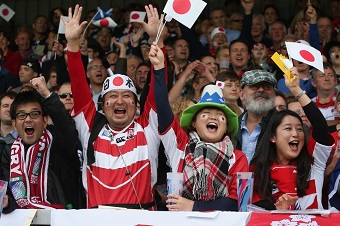 This has already been a great festival of rugby – which to a great extent is down to the manner in which the Japanese have embraced every aspect of the rugby culture. Momentum is building. The local atmosphere has to be experienced to be believed.
That said, I have been shaking my head sometimes at some of the media coverage. I know it’s all part of the baking of the cake but, when you read of crisis in team camps and detailed forensic analysis of the teams’ supposed shortcomings (most strident inevitably by journalists of their own nation) you do begin to wonder.
What you need to remember is that – to borrow a military maxim – whilst individual battles matter, of course, this proper way to regard a Rugby World Cup is as a War.
We’re still a long way from the end game.
