
Heaven can wait
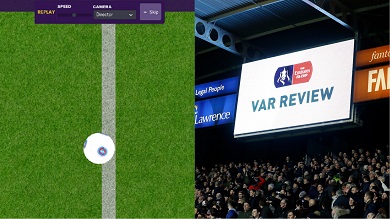
My subject today is one of sport’s current cause célèbres – the use of video technology to ‘improve’ the quality of refereeing and umpiring decisions.
Even that statement raises an issue. Simply because it involves judgements and decisions made by one or more human beings, the skill of officiating sporting contests has never been an exact science. Unless you happen to be, or believe in, the Pope – history shows us that humans are not infallible.
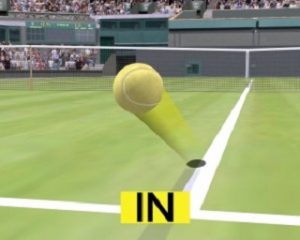 Arguably, of course, therein lies one of sport’s greatest joys and attractions. How different and sanitised would sport be if ever it became possible to devise and apply a robotic AI system whose algorithms ensured that no officiating decision was ever wrong?
At a stroke, whilst such a ‘monster’ might satisfy the purists, simultaneously it might extinguish sport’s glorious uncertainties, crowd atmospheres and all post-match pub discussion controversies.
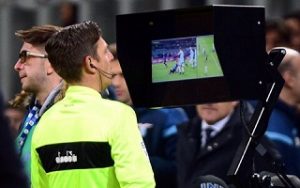 Already some have pointed out how football’s VAR system has sown confusion: for example, every time a goal has apparently been ‘scored’, can supporters safely celebrate … or might it be better for them to ‘hold their fire’ just in case the video official might intervene and point out some technical infringement missed by the referee that requires it to be ‘chalked off’?
Taken to its logical conclusion any ‘perfect’ automated officiating system could eventually remove chance, flair, creativity and inspiration from the equation and bring about a world in which sport becomes little more than a glorified computer game.
Gone forever might be the ‘art’ of a talented expert referee or umpire encouraging open entertaining play by sometimes interpreting (or even ignoring) the strict letter of a law or rule in order to let the contest in question ‘flow’.
In what follows I am going to concentrate largely upon video technology as it has currently been introduced differently in rugby union and football.
 In rugby, teams routinely prepare for matches not only physically and tactically but also for manner in which the chosen referee is known to interpret the laws and rules, right down to the detail of those he will tend to apply to the letter and those he may not.
After all, in rugby giving away penalties, especially unnecessary ones, can easily lose you a game.
This approach also applies during a rugby game itself. Early on, both teams may ‘test’ the referee to see what they may or may not be able to get away with. If on the day the referee concerned is being ‘hot’ on players who stray offside at scrum-time or the breakdown – then don’t do it.
 Debate often arises about the refereeing of a breakdown – often the teams that gain ascendancy or ultimately prevail do so because their forwards have been better at “staying on the right side” of the official.
Another feature of rugby is that referees tend to chat to the players, almost to the extent of giving a running commentary: “Hands away, 7!”, or “No, no, 5 – get back” and, providing said individuals comply (or make it absolutely clear they are trying to) then play may continue without the punctuating accompaniment of a shrill blast of the whistle.
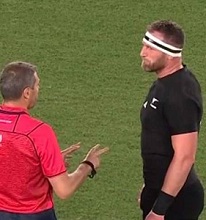 Rugby players can also ‘play’ the match official.
Normally only the captain speaks to the referee, and respectfully.
Some of them tend to keep in his ear throughout the match: others rarely speak to him, possibly in the hope that if and when they ever do, he’s more likely to listen to their point of view. Throughout history there have been examples of rugby captains who have seemed to have had an uncanny knack of influencing a referee’s approach.
When it comes to rugby’s TMO system, the referee is in charge and ‘miked up’. When there’s a try – or any incident – the ref first consults his linesman/men, effectively beginning with “I saw it this way, did you notice anything?” If there’s any doubt between them, and/or for confirmation, he might then call up the TMO.
 In a potential try situation he might say “I’m happy with the grounding, can you look to see if his foot was in touch or not?”, so the TMO is just addressing the “Was he in touch?” issue.
The replays are shown – and the ref decides on the try. Or, perhaps, the TMO might also add “I think there might have been a ‘block’ [of a defender] in the passing move, may I show you that? “, so the ref then looks at that as well. And may then disallow the try. A couple of minutes, end of.
Meanwhile, football’s VAR system – as currently being operated in the Premier League – has become the cause of much controversy, analysis, complaint and media outrage.
 Whilst most welcome the advent of video technology in principle, many object to its apparent inconsistencies, ‘pernickety’ technicalities (it seems that a wrist or even toenail protruding beyond the imaginary graphic line across the pitch can rule a player offside) and – above all things – the time it takes to gain decisions.
Perhaps to a degree – contrast this with the position in rugby – one of the issues in football is the uncertainty as to whether the match referee or the proverbial ‘man upstairs in the video booth’ is in charge of proceedings.
Another is that of how far back in a move or flow of a match the ‘man upstairs’ can go (or not) in bringing something to the notice of the referee.
 In last Sunday’s Liverpool 3-1 victory over Manchester City, for example, a good deal has been both said and written about the rejected ‘hand ball’ incident that took place in Liverpool’s penalty area before, some twenty-three seconds later, the ‘lucky’ home side then scored a spectacular goal.
There’s an irony is the fact that – had VAR not been on hand – most likely there’d still have been plenty of post-match ‘chat’ about said passage of play, but perhaps a great deal less ‘heat’, because everyone would have accepted the principle that the referee on the day was in charge of proceedings and anyway (in football as in so many games) ‘the rub of the green’ is often a factor.
However, the fact that VAR was on hand – and being used – took the debate to a whole new level.
Effectively (once again) the system became a convenient scapegoat for a perceived inconsistency and/or ‘unfair’ outcome.
It would seem that plenty more proverbial water will have to flow under the bridge before video technology becomes a settled and accepted part of sport – as, one day, it assuredly will.
