
My art week
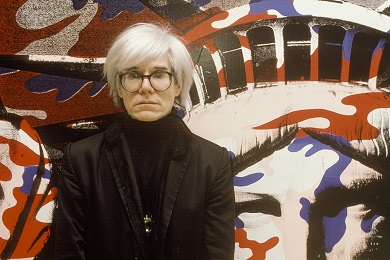
Looking back at my art week money seems to be the dominant theme, whether it’s the artist or the museum provider.
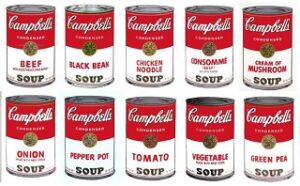 In our art course we studied Andy Warhol the ultimate consumer painter.
Walking down Fifth Avenue after emigrating from Russia he was fascinated by the marketing of consumer objects in the shop windows.
In a sense he changed the whole notion of art from being a window of the world to an interpretation and an interface of consumer goods like the Campbell soup can or Coca Cola bottle.
Our teacher defended his Factory where such objects were mass-printed along with icons like Marilyn Monroe as it was nothing new: Raphael, Titian and Rubens had massive studios – as does Damien Hirst.
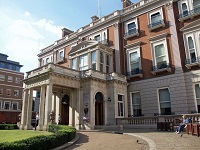 In London I visited the Franz Van Hals’ portraits at the Wallace Collection.
Van Hals made his reputation as a portraitist of the rich burgers of his native Haarlem.
Most were dressed in black Spanish finery and although I admire Van Hals’ detail there was something distinctly ‘samey’ about the paintings.
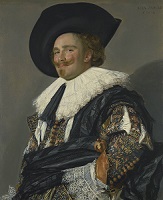 The one that shone out was his most famous The Laughing Cavalier.
Richard Wallace, founder of the Collection, out-bid Baron Rothschild for the picture with the equivalent of £7 million.
Van Hals reputation has waned as Rembrandt’s increased but the picture – oddly-named as the subject is neither laughing nor a cavalier – restored it.
It therefore bucks the trend as his most celebrated work is in my view his best.
The admission price for an exhibition of 12 pictures, where the most famous is a permanent part of the Collection anyway, was a stiff £12. This reflects the current trend of costly admission to a small dedicated exhibition.
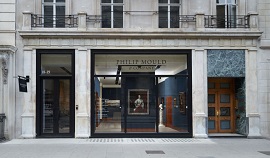 My next port of call was the Philip Mould gallery in Pall Mall for his Duncan Grant exhibition.
On arrival at 5-45pm I was informed they were setting up for a reception but could go downstairs.
The exhibition was well-curated with a film featuring Angelica – the daughter by Grant’s affaire with Vanessa Bell – who went to marry his lover Bunny Garnett.
Vanessa’s son Quentin also featured.
Sadly his brother Julian, both of them being offspring from her husband Clive Bell, died as an ambulance driver in the Spanish Civil War.
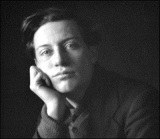 Grant was much influenced by Paul Cezanne and though there is a revival of his work in the auction houses I do not think he is first rank.
Indeed I will go further and assert that all the Bloomsberries are more celebrated for their unconventional sex lives than their output.
The exception might be Dora Carrington but she was obsessed by Duncan Grant’s gay cousin Lytton Strachey.
It’s interesting that Virginia Woolf is not heralded today as much as one would have thought, given the current mores, as her Orlando covers transgender issues.
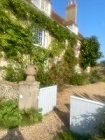 My immersion with Charleston was completed yesterday with a visit to the Grant exhibition there.
Again this was modest in number but expensive in price (£12).
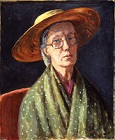 I did enjoy the portrait of Vanessa Bell and Interior a study of Vanessa and Bunny Garnett trying to translate Dostoyevsky.
His mother Constance Garnett was the foremost translator of Tolstoy.
 If you went as a family of 4 and had a coffee and cake you would be looking at £75-80.
As is often the case in Sussex, the drive on a clear but crisp autumnal day through leafy Glynde was, if anything, more uplifting than the exhibition.
