
My Rembrandt
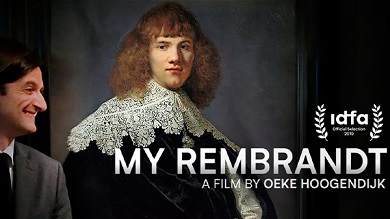
This is a Dutch documentary available on Amazon Prime which I watched last night.
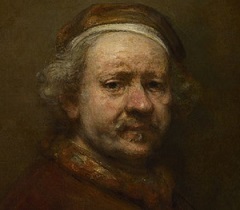 It’s about the ownership or acquisition of a Rembrandt.
Rembrandt never went out of fashion unlike his peer Johannes Vermeer who had to wait 200 years for fame. Similarly Gustav Klimt and Sandro Botticelli would have to wait a few centuries for their accolades.
Rembrandt had a prodigious output of diverse works including 600 self-portraits, biblical scenes and iconic works such as The Night Watch and The Anatomy Lesson of Dr Cuyp.
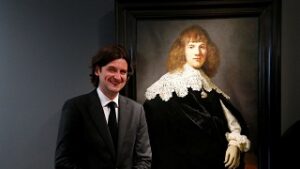 The programme began with an art dealer Jan Six, whose family of art dealers and collectors go back to Rembrandt’s day, discussing the acquisition of a school of Rembrandt picture Portrait of a Gentleman from Christie’s with an investor.
This sets the tone of a fly-on-the-wall documentary but as we all know the subjects know a camera is rolling and behave appropriately but differently.
 Next up was The Duke of Buccleuch who wanted his “lovely contemplative portrait of a woman reading” by Rembrandt moved from its high-hanging position in his castle.
Then another very rich man Eric de Rothschild explained why he sold his Rembrandts.
 Then we had American billionaire specialising in natural resources Thomas Kaplan very much in the mould of the Collector series I have reviewed.
His Leiden collection contains the most number of Rembrandts in the world and to be fair is lent out publicly.
There was a big party to celebrate one donation and he was very much in his element.
Then we had a joint acquisition by the Rijksmuseum and Louvre unveiled before the then French President Xavier Hollander and the Dutch Royal family.
 All the time we were kept posted with developments of the Six acquisition.
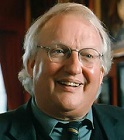
World expert on Rembrandt Ernst van der Wetering believed it a fake but Six proceeded to acquire it.
When he did so the original investor was outraged as he was excluded and we saw footage of Six defending himself on Dutch television.
The programme suffered from jumping around too much between the various collectors.
Neither the art dealer nor the museums came out well but this was no surprise to me.
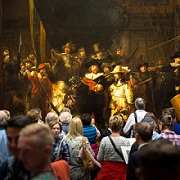 The funding of museums once they re-open is bound to be an issue but I would be surprised if two ways of doing so are discussed.
The first is museum charges.
I paid €18 to enter the Rijksmuseum and €17 for the Van Gogh but anyone can visit the National Gallery or Tate Modern or Britain for free.
The second is – heaven forbid- selling a picture.
Generally a museum will keep back 2/3rds of its collection from view.
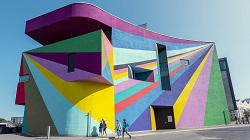 The Towner Gallery in Eastbourne keeps back a fine collection of Eric Ravilious who studied at the Eastbourne College of Art.
If they sold one nobody would notice.
Museums are increasingly commercial. The gift shop gets bigger and bigger and their websites more a sales catalogue than an information resource.
This reflects a world which likes to be a connoisseur of art but whose motivation is more venal.