
Napoleon’s Plunder and the Theft of Veronese’s Feast/Cynthia Salzman
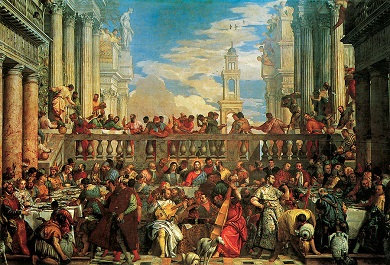
 This is an account by Cynthia Salzman of the appropriation of Paolo Veronese’s Wedding Feat of Cana in 1796 by Napoleon.
The painting hung on the refectory wall of the Santa Maggiore church in Venice commissioned by the Benedictine Order.
 Napoleon , just 26, had conquered most of the Italian states, but not Venice – now in decline as a maritime power.
To avoid similar conquest Venice acquiesced to this appropriation which included 20 works in all which were taken back to Paris. In taking this huge picture from the wall it was torn and damaged.
It hung in a special room in the Tuileries and then finished up in the Louvre.
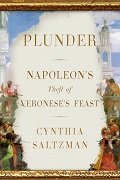 It’s not really a subject matter that can fill 300 pages so the author has much to say about cultural appropriation, other artists – like Jacques Louis David and Jean Gros – at the time of Napoleon, the rise of Napoleon but not enough to satisfy the historian, cultural observer or art connoisseur.
The picture itself features a lively marriage banquet in which Jesus Christ transforms water into wine. It’s full of colour, activity and belies Andrew Marr’s theory on Rembrandt’s The Night Watch being the first action picture.
It’s huge and occupies a entire wall in the Louvre dwarfing in size, if not in fame, the Mona Lisa.
Napoleon was no art lover. He appropriated art for his personal and France’s grandeur.
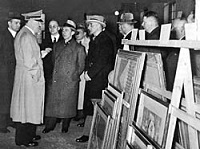 Hitler tried to do much the same (ironically during World War Two the Louvre’s finest works were transported from his grasp) and Goering was a serial looter of artworks.
It was never returned to Venice.
