
Pushing a boulder up a hill
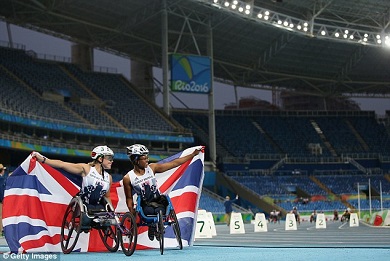
It’s well-known that two signals of old age are firstly, an entrenched belief that things were better ‘back in the day’ [what a horrible phrase!] and secondly, a tendency to repeat one’s own stories. Thus I begin my post today hoping, probably in vain, that in addressing today’s chosen subject I won’t come across like a stuck record.
It would be a sad development indeed if the Rust ever became the last refuge of a bunch of geriatric curmudgeons bemoaning life and the modern world.
However.
I cannot help it, folks, but the relentless BBC radio coverage of the Rio Paralympics is becoming more and more irritating.
What gets to me is the inherent suspicion that somewhere within the BBC hierarchy the ‘right on’ PC Brigade have decided that the brownie points to be gained from giving the full works treatment to its coverage of the Paralympics are potentially so great in number (particularly in the ‘public service’, educational, informing and progressive departments) that it’s a no-brainer/‘win-win’ situation that may in the medium term assist the Corporation and its privileged employees in surviving longer, hanging on to the licence fee and/or securing their very healthy indeed pensions.
Every day I am being bombarded by instances of the normal service provided by Radio Five Live being suddenly interrupted in order that “We can now go over to Rio for the latest in the T.42 discus final …”, whereupon a pair of BBC presenters, presumably dressed in regulation shorts and T-shirts and sunning themselves somewhere within sight of Copacabana Beach, work themselves into a cod-frenzy of anticipatory excitement and adrenalin at the prospect of describing the next plucky Team GB competitor in a quarter-full stadium propelling a spear about the length of a cricket pitch, all in the style of a commentary upon a soccer star taking the last but one penalty in a World Cup Final extra-time penalty shoot-out (that will either win or lose a tournament) whilst being witnessed live by a global audience of 7 billion.
I don’t doubt for a minute that if I sat down and reviewed my life for a minute or two, I could think of past historic examples where your author has unconsciously been ‘educated’ into being a more socially and PC-aware (indeed just better generally) person than he might otherwise have been by subtle ‘positive action’ initiatives promoting the interests of disadvantaged, weak, vulnerable, oppressed and discriminated against minority sections of the world’s population. Even more likely, I am sure that there are well-meaning campaigners who could point out such instances to me more easily and vividly than I could remember them myself.
Still – and this could just be my Neanderthal personality and advanced years speaking – I am becoming fed up to the back teeth with radio presenters encouraging their ‘former Paralympian great’ pundits to wax lyrical upon what the featured Team GB participant of the moment must be ‘feeling now’, especially after all the hard work and training that they’ve put in … and of course the measures that they’re taking to combat the effects of lactic acid build-up … and so on, and so on … er, since they won their 4 gold medals at London 2012 in three completely different disciplines … bearing in mind, we mustn’t forget, that they’re currently still on course to win another 6 in Rio before the Paralympics finish in five days’ time.
I just cannot help it – for me, the BBC’s live Paralympics coverage comes across rather in the manner of a classic Steve Coogan/Alan Partridge or Ricky Gervais satirical mockumentary – the verbiage spilling out by the yard, full of portentous seriousness and ‘sense of occasion’, sits uneasily and incongruously with the less-than-compelling reality of what is being described and the context in which it is unfolding.
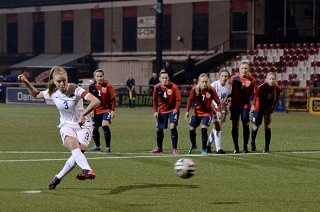 Just as the latest English women’s soccer Super League results being given the full ‘BBC Match of the Day’ treatment (goal highlights to the fore) on the sports news etc., when in fact even the half-interested viewer can see all too clearly for themselves that the stadium in which they are playing contains but three or four hundred spectators and a couple of dogs (maximum) in my view tends to have the opposite of what one presumes is the intended effect – i.e. to give the impression that women’s soccer is rapidly becoming as popular and important as men’s.
It is my contention that mounting this kind of ‘over the top’ coverage of Paralympic competition does little to advance the cause of ordinary disabled men and women.
Here’s a link to an article illustrating my point, written by Ross Clark, the father of a disabled child, that currently appears upon the website of the – DAILY MAIL
