
Riviera at War//George Kundahl
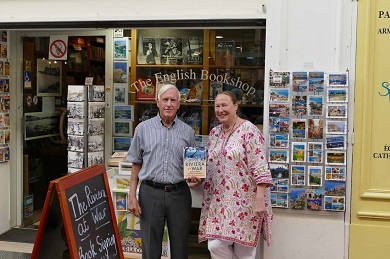
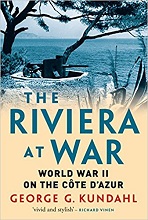
This is a most detailed account of World War 2 on the Riviera by American writer George Kundahl. Sometimes it is difficult to extricate themes from the mass of statistic. Nonetheless the account serves to enlighten the reader on a relatively undocumented region and theatre of war.
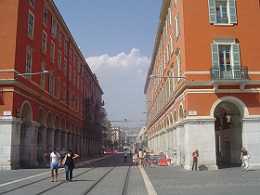 The Riviera changed hands 5 times during the war. Once France fell, it was part of Free Unoccupied France, then was invaded by Mussolini claiming it to be part of the Kingdom Of Savoy (Garibaldi was born in Nice) then the Nazis invaded and occupied with some brutality, it was then liberated by the Americans and handed back to France now under de Gaulle. You can still see plaques on the buildings commemorating those in the resistance who died. On the principal thoroughfare in Nice Rue Jean Medecin there is a plaque to two resistance leaders that were hung and left there, schoolchildren being forced by the Nazis to file past.
Mussolini’s fascist dictatorship had a more benign attitude to the Jews than the Nazis so much so that their occupation resulted in the region being a safe haven for fleeing Jews. The Vichy police known as Le Milice enforced Nazi persecution with round-ups and deportation of Jews with gusto.
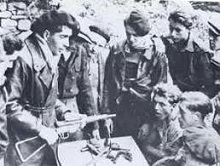 The exact composition and number of the resistance (maquis) is also of much interest. After it was clear that the Nazis would not win the numbers swelled significantly leading to the description of the resistance as August 32nd.
It probably numbered between 400-500,000. Of these many were communists ideologically opposed to De Gaulle with an alternative vision of post-war France.
The campaign to liberate the Riviera known executed in August 1945 as Operation Dragoon was successful. The Allies landed at St Tropez and St Raphael, fooling the occupiers that it was going to be Genoa.
 However the Wehrmacht was stretched and most of its resources were in the north after the Normandy landings. The Allies had air and sea supremacy. For most of the Allies military leaders it was a race for Berlin but De Gaulle was more concerned about liberating France. His forces were supplemented by colonial regiments from Morocco and Senegal whose colourful uniforms contrasted with their ferocity. Most of their soldiers were setting foot on French soil for the first time. Good order was quickly established by the fifth occupier, the Free French, though there were 7reprisals and some French women had their hair shorn for collaboration horizontale.
This was hardly an edifying period in French history. We as a nation should be grateful for Churchill for seeing how desperate a Nazi occupation would have been and overruling any negotiations in May 1940. Once the USA was in the war – not least due to Churchill writing to President Roosevelt every day – it was never going to be won by the Nazis. Although France recovered and restored itself speedily the scars exist to this day as do the plaques on the buildings of Nice.
