
That was then … and this is now
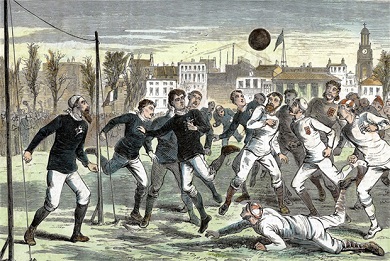
When it comes to business and sport, it’s a funny old world isn’t it?
From a sports fan’s perspective, geography is generally a vital ingredient.
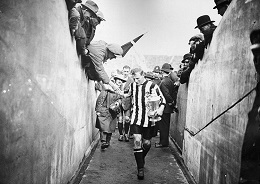 Youngsters can be brought up from the mother’s milk and Farley’s rusk stage of life to watch their parents’ favourite teams, players, athletes and cyclists or 10 metre board divers on the television at home but – most likely – their first experience of ‘live’ sport will be down at their local club, athletics ground or swimming pool at which the antics of global sporting giants will seem a couple of universes away, never mind half a county or country.
Community roots matter.
In Britain, for example, when one contemplates the great rivalries – local or regional – of sports such as football, which club you follow has a quasi-religious-like theme running through it.
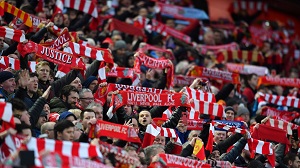 Liverpool or Everton … Rangers or Celtic … Arsenal or Spurs … Newcastle or Sunderland … (I could go on): to which of these clubs a youngster from their regions declared allegiance – and with which he/she shared a journey through thick and thin – was potentially a matter of fundamental belief.
Brothers and brothers, brothers and sisters … aunts and uncles … parents and their kids … even just friends sharing a rented property … all of these could all be “set against each other” for life based upon their choices, sometimes made on the flimsiest or most random or absurd of justifications.
It didn’t matter. One you had “your” club, that was it.
In days of yore, young players with talent drifted towards their local “big” clubs and huge civic and regional pride was generated by local scouts spotting – and then the clubs developing – the potential football stars of the future.
Stuff happens, of course, times change and human society, together with its latest accessories, hurtles relentlessly into the future.
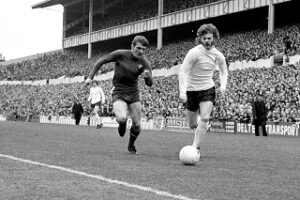 When I was a kid, the great teams in the English First Division includes Liverpool, Chelsea, Arsenal, Spurs, Leeds United, Newcastle United, Wolverhampton Wanderers, West Bromwich Albion, West Ham United, Southampton, Manchester City, Blackburn Rovers and Manchester United … [Rusters can add their own favourites here].
Sure, there were the occasional one-off fairy tales … Cup upsets and so on … but these were genuine rarities and all the more epic and legendary for that.
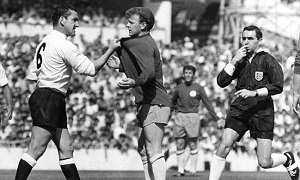 Everyone – great and small – seemingly accepted their place in the hierarchy of these things, even when from time to time self-made multi-millionaire businessmen all over the country suddenly invested in their local club and brought it unexpected great – but sometimes only fleeting – success … and in the process made its fans very happy, if only temporarily.
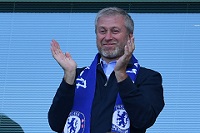 Then one day – I’m making sweeping generalisations and jumps forward here for space reason in my contribution today as much as any other – the mega-rich billionaire Roman Abramovich bought Chelsea … and the era of global big business buying into the elite structure of the English national game began.
And has never ended, simply because in sport, as well as in everything else – globally-speaking – money matters and mega-money dominates.
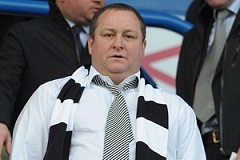 This week, in all the hullabaloo surrounding Mike Ashley’s Premier League-approved sale of Newcastle United for £305 million to a Saudi Arabian state-backed organisation [see the sports media for details if you need them], the one consistent feature in the reaction of Newcastle United fans is that the deal will – hopefully – finally bring them the global-stage success that has eluded the club for half a century.
They don’t give a row of beans about the human rights record of Saudi Arabia, the murder of Saudi journalist Jamal Khashoggi, peace in the Middle East, the world’s existential Climate Change crisis … or indeed anything else.
 Why should they?
All that matters to them is that at last – it appears – they’ll be able to match (if not emulate) the outlays that the owners of Chelsea, Manchester City … and indeed all the great and super-rich clubs of Europe … can muster in order to buy themselves the best players in the world .. and therefore the most important and prestigious trophies available in the sport of football.
It’s progress of a sort, I guess.
