
The Battle of the Atlantic/Jonathan Dimbleby
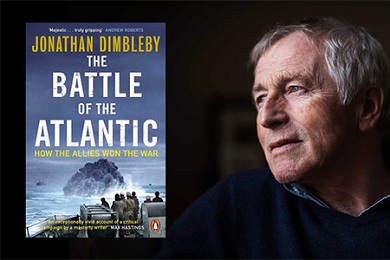
There is a new type of historian about – one who is not an academic but in the media, like Sir Max Hastings or Jonathan Dimbleby who has written the above account which I read as an audio book narrated by him.
Like most history books it is far too long and would benefit from editing. It is not just about the Atlantic War but actually a naval history of World War Two in the Atlantic, Arctic and Mediterranean.
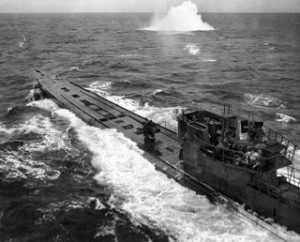 The latter especially the Arctic convoys to Russia occupy whole chapters.
However the Atlantic war itself was of vital importance. At one point the loss of tonnage inflicted by Admiral Doenitz’s wolf packs of U-boats was so acute that it was thought that Britain would be starved into submission.
The war in the Atlantic was won because of a number of factors:
(1) The British had by 1943 developed superior radar with a 10cm device that could detect U-boats long before seen;
(2) The Americans with the make shift Liberty could produce merchant vessels at a greater rate than they could be destroyed;
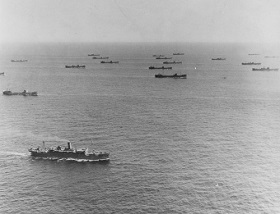 (3) The U-boats had to be deployed in the Mediterranean and Arctic as Nazi forces became stretched;
(4) Royal Navy commanders like Johnny Walker became more than a match for their Kriegsnarin counterparts.
Dimbleby is not slow to criticise though. The U-boat bases in Lorient, Brest and along the Atlantic Coast should have been bombed during their construction, after that their 16 tonne shield made them impervious.
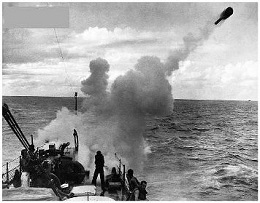 More long range bombers like the Liberator should have been deployed to protect the convoys.
It was, according to him, a strategic error to use bombers on German cities and not as protection for convoys. This is the fashionable revisionist view which fails to take into account the Luftwaffe bombing of Rotterdam, London, Coventry, Liverpool, Belfast, Plymouth and Malta: that it tied up the German materiel which they needed on the Eastern Front: that Josef Stalin was clamouring for the opening of a second front: that it reduced German morale and generated cynicism in the promises and image of their Fuhrer.
I listened to this read by Dimbleby. He struggles with accents notably that of Churchill and Americans. He has that smugness that is a unattractive trait of all the Dimblebys. Nevertheless one can not fault his research into a vital theatre of war where much valour was shown in truly awful conditions.
