
The importance of realism
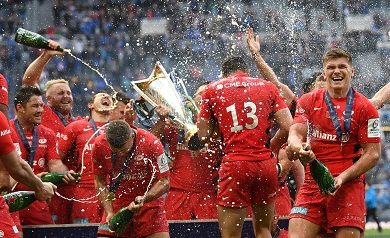
Let us be blunt – despite all its special camaraderie and virtuous trappings rugby union is no different to any other sport at the highest elite level.
Without donning the rose-tinted glasses, down through its illustrious amateur history those who played the game, and its many fans, wallowed in a degree of pride at the nobler feelings that its physicality and team spirit engendered.
 Taking their cue from that old chestnut with many suggested originations “football is a game for gentleman played by hooligans, rugby a game for hooligans played by gentlemen” – in fact the most likely of them being the motto of the nomadic invitation-only club the Barbarians, coined by the Reverend Walter Carey, sometime Bishop of Bloemfontein – a heavy-duty forward who is his youth won blues for Oxford, played for the Blackheath club and toured with the 1896 British Lions to South Africa – “Rugby football is a game for gentlemen of all classes, but for no bad sportsman in any class” – followers of the oval-ball game have grown old celebrating the weird combination of the supposed moral uprightness of the spirit in which it was played on the pitch and the silly “boys on tour”, often inappropriate and disrespectful larks (“Let’s get drunk, steal the traffic cones and stick them on the heads of the statues outside city hall …!””), that its adherents got up to after a hour or two of post-match collective drinking.
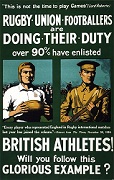 At the beginning of WW1 the notion that rugby was played by the finest manhood that the British establishment could offer was given a boost by the Rugby Union’s call for its players to set an example by being the first to sign up for military service, which many of them did.
George Orwell’s later dismissal of sport (“War minus the shooting”) was gleefully taken as a specific reference to rugby by its fans – which it was not – but the folklore of hulking great forwards knocking six bells out of each other for eighty minutes, then applauding each other off the pitch and regrouping in the bar for to buy their opposite numbers a drink (or maybe several) became a self-congratulatory source of camaraderie wherever in the world the game was played.
Even today rugby revels in its anti-hero maverick joshing references to “the piano shifters in the scrum” and “the girls in the backs”, whilst even those ply their trade in the hardcore area of the scrum front row often allude to the IQ-challenged brainpower of their kind.
 A sudden breakout of thuggish group violence on the pitch, which in any other circumstance might have attracted arrests and charges of ABH or worse, is routinely dismissed by TV and radio match commentators in matey style as a touch of either “handbags” or “afters” and then later smoothed over by the referee with a quiet word to both captains and then forgotten.
These are all part of the supposed ‘fun’ of the sport.
All that acknowledged – and to return to my theme for today – in both the amateur and the (post 1995) professional eras, the administration of rugby union was always beset by more expedient practices and scandals.
 Rugby League sprang directly from a growing spat over “broken time” payments – the unfairness that working class players were disadvantaged by losing income every time they had to take time off work to comply with the increasing number of games being scheduled by the authorities, whereas in contrast those of plentiful means were untroubled by the development.
In the 1920s French rugby was ‘sent to Coventry’ (banned internationally for years) because of the rife practice of “boot money” being given to its players, a phenomenon that also existed in every other country – along with “jobs being found, or houses being bought” for the players – but was hypocritically swept under the carpet all the way up to the advent of professional rugby.
And so we reach 2020, in which breaches of salary caps – Saracens being far from the only guilty party in this respect – and (off accounting records) examples of “image rights” deals and all the other little ways in which agents and players can negotiate (or be offered) inducements to switch – or remain at – professional clubs everywhere are endemic.
It’s the way of the world.
As a career rugby is inevitably alarmingly brief and accompanied by the ever-present threat of career-shortening or ending injury. Why should not its players cash in whilst they can?
 Furthermore, when in football the toughest and best agents (so we hear) can sometimes get paid tens of millions of £s for a single transfer, in rugby there is a constant ‘mating ritual’ going on in which agents seek to move their charges from club to club in pursuit of more money and better deals (for both themselves as well as their clients).
What else did you expect?
Sometimes – when high-minded commentators and scribes are pontificating about the way rugby is going – they would occasionally do well to remind themselves of this.
