
The Public School film genre
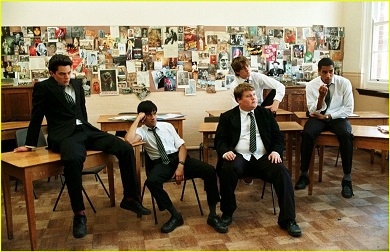
On Friday at the unusual time of 6 am I watched the 1994 version of The Browning Version.
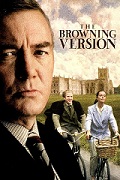 It was originally the directorial project of Ridley Scott but then taken over by Mike Figgis.
The screenplay was by Ronald Harwood (The Dresser) and the stellar cast included Albert Finney, Greta Sacchi and Michael Gambon.
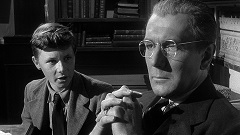 It’s not as good as the Terence Rattigan play, nor the 1951 film version with Michael Redgrave, as it tries to update the drama with a handsome smart ass chemistry American teacher , more ethnic diversity, liberal use of the “f” word and boys’ cruelty in the style of Lord of the Flies.
It does have a major piece of acting in Albert Finney as Andrew Crocker-Harris, the brilliant classical scholar who becomes a crusty teacher, now forcibly retired.
 At first sight the casting of Albert Finney in an teacher’s role is as unlikely, and as successful as Michael Caine in Educating Rita, as Finney – a Salford lad famous for his youthful exuberance- in dress, voice, manner and comportment he is totally credible as a crusty classic teacher with a soft underbelly.
He is feared and loathed by the boys in equal measure except one, Taplow, who gives himself the gift of Aeschylus’ Agamemnon translated by Robert Browning which provides the title.
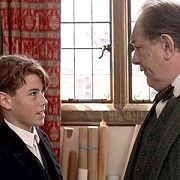 His wife Laura is unfaithful and the snake oil salesman of a headmaster (Michael Gambon) is trying to do him out of his pension and not giving him top billing in the end of term ceremony.
In the play he successfully obtained both but here his second speech at the ceremony, where he speaks of letting his boys and himself down, is the denouement which the boys cheer.
It’s more a play about confronting failure than public school but has the staple scenes of the cricket match and classic master like the wonderful Goodbye Mr Chips.
It is sometime since I have seen Lindsay Anderson’s If which takes the genre to the ultimate extreme of an armed insurrection.
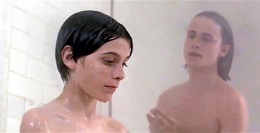 If also has a shower scene and an unloved wife wondering around the dormitories nude.
As a film genre it’s probably now finished as these type of public schools no longer exist or they are not the basis for a film.
Surprisingly, the one feature you might accept in such films – homosexuality both amongst pupils and in the common room – does not feature.
It’s not even hinted at in the relationship between Taplow and Crocker-Harris.
