
VE-Day commemorations and something quite different
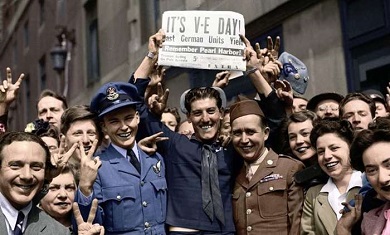
With the 75th anniversary of VE Day coming up on Friday (8th May) I had in advance ‘scheduled for recording’ last night’s 8.00pm offering on Channel Four of VE Day in Colour – Britain’s Biggest Party but then watched it as it went out anyway.
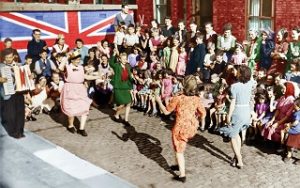 As it happens I found its mix of colour and black and white contemporary footage, together with bits of commentary and the modern reminiscences of ‘people who were there at the time’ disappointingly uninspired, not to say pedestrian – for a start it might have been improved by a decent presenter/reporter fronting it – and retired to bed some twenty five minutes in.
Hopefully the other commemorative radio and television programmes coming up later this week will be more impressive.
Without suggesting that I have particular qualities of intelligence or artistic sensitivity the experience has had me ruminating as to why VE Day in Colour hadn’t quite “done it for me”.
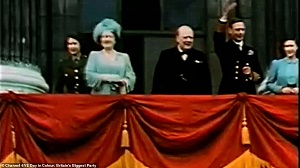 One of the minor issues was that it was never made clear to the viewer whether the ‘in colour’ aspect denoted that the colour film footage was ‘original’ or what these days we call a ‘colourised’ version of the black and white variety.
Another was the fact that in the first ten minutes of the documentary the same footage – of Churchill engaging with the crowds and walking out onto the balcony of Buckingham Palace with the Royal Family – was played twice, either a lazy mishap or perhaps signalling that the programme-makers didn’t have enough colour footage to fill the time.
 My musings developed – in a wider, general context – into consideration of how (if) the qualities of original or ‘first hand’ contemporary evidence should or might be deemed to outweigh the value of those recalled years later by those who were there; those of historians, academics and journalists who come afterwards having read every source and book available on the subject and then provide their insights or conclusions as to why what happened did ; or even those of great creativity, integrity and vision who write novels, plays and/or scripts, or deliver theatre, television or movie productions which may provide either superb evocations of “what actually happened” or even contain aspects, themes or angles that de facto were in the minds and motivations of none of the participants in the historical events concerned.
Let me expand.
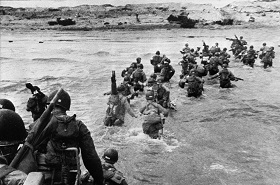
As occurred with the 75th anniversary D-Day celebrations last year, those later this week will no doubt lionise the still-living individuals who have been prepared to be interviewed about what it was like to be in Britain at the ending of WW2 in Europe.
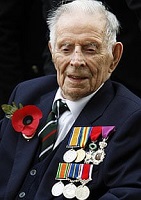 However, as with ‘national heroes’ such as Harry Patch, who died in 2009 as the last living WW1 soldier aged 111, the D-Day veterans who attended last year’s celebrations – and yes, even Captain Tom Moore (100) who recently raised over £30 million for the NHS – it’s important to appreciate that the overwhelming respect, reverence and affection that we felt/feel for them stems primarily from the fact they were/are the last living links with the events we’re commemorating, not necessarily because they were actually heroes during the actions in which they took part, if any.
I’m not suggesting that those above who put their lives on the line in their nation’s hour of wartime need and have been fortunate enough to survive until now were in any way ‘lesser’ than those who didn’t, whether the latter – decorated with medals or not – were killed, maimed, suffered post dramatic stress disorder or other conditions, or simply died of other causes at some point between their active service and the age of 80 plus.
 I once met Richard Holmes, the military historian, before he was about to give a talk to a packed chapel during the Chichester Festivities not long before he died.
He made a perhaps obvious but telling point about the general ‘quality’ of memories in his book Tommy: The British Soldier On the Western Front (1914-1918). It was that one should be careful about them.
Contemporary recollections were one thing.
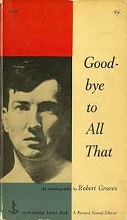 But those committed to record years later had to be treated with caution.
Take Robert Graves’ Goodbye To All That, his classic autobiography covering his time in the WW1 trenches published in 1929, as an example.
Later research proved long ago that, sincere or not, large sections of it were made up in the sense that many of the actions in which he described taking part hadn’t taken place when, or in the manner, that he claimed they did – and/or indeed that he wasn’t even there at the time.
It was important to keep in mind that even memoirs produced by WW1 veterans five to twenty years after the events they cover may also – subconsciously or otherwise – be influenced by historical accounts and conclusions published in the meantime by other veterans, or academics and historians.
I now jump inelegantly from the profound to the absurd, as the subjects concerned would probably gleefully agree.
Here’s a link to a piece by Dalya Alverge on Peter Sellers: A State of Comic Ecstasy, an upcoming documentary on Peter Sellers to be shown on BBC2 on 9th May, in which Britt Ekland – married to the great comic/actor between 1964 and 1968 – talks about his mental instability and controlling personality – see here, as appears today upon the website of – THE GUARDIAN
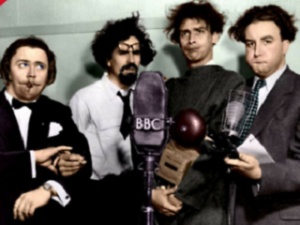 This prompted me to reflect upon the legendary The Goon Show – most particularly key Goons Sellers, Harry Secombe and Spike Milligan, but also others including Michael Bentine who was one of the ‘originals’ – many of whom came through WW2 in the military and cut their comedic teeth in wartime entertainment troupes but later suffered mental and other issues in their lives.
How are these two very different subjects connected in this post?
Well, I began my internet research by consulting Wikipedia and calling up the entries for The Goons and those mentioned above.
And came across a glaring inaccuracy which chimes with the points I have been making about this week’s VE-Day commemorations.
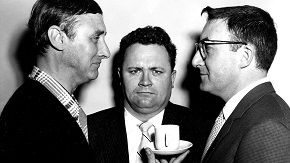 Many Rusters will know the famous story about how Harry Secombe and Spike Milligan first met whilst serving in the British Army during WW2.
According to the Wikipedia entry on The Goons, Milligan’s artillery unit were set up on top of a cliff and somehow a 25-pounder gun accidentally rolled off it, causing both consternation and confusion all round.
Milligan was detailed to go down and locate it. At the bottom of the cliff, amidst the undergrowth, there was another British unit. Milligan came across a truck, opened the flap, and asked “Has anyone seen a gun?” and Secombe (for it was he) responded immediately “What colour was it?”
Hilarious.
 Except that, as I remembered it from Spike Milligan’s wonderful WW2 recollections Adolf Hitler: My Part In His Downfall – subsequently confirmed by two other websites – the tale contained in the Wikipedia entry on The Goons of how he and Secombe met is balls.
It was exactly the other way around.
That is to say, the set-up was as described but it was Secombe in the artillery unit that lost the 25-pounder and Milligan who was in the back of the truck at the bottom of the cliff and add-libbed the immortal line “What colour was it?”
All human recollections of “what happened in any particular situation” are by their nature inherently subjective.
The same event can (and will) often be markedly differently described by every individual who was present – ask any policeman, judge or lawyer.
This is why anyone going researching on the internet should be wary of taking everything, and indeed anything, they come across at face value, at least without also seeking corroboration or supporting evidence.
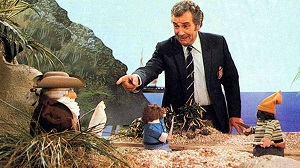 Apropos of precisely nothing, some three decades ago now, I met Michael Bentine briefly and did some business with him.
ITV needed some repeat rights cleared on his children’s show Michael Bentine’s Potty Time.
On the first occasion I was called into my boss’s office and introduced to him, which took no more than a couple of minutes and an exchange of contact details.
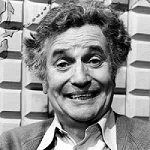 On the second and third we arranged to meet up and do the business.
He was a warm and and clubbable man, highly intelligent, possessed of a butterfly-type mind and yes, delightfully dotty. The business bit took about ten minutes in total but the two hours I spent in his company were some of my most memorable, regularly punctuated (of course) by his infectious high-pitched giggle.
A propos of nothing, I noted this morning that Bentine and Secombe both died of prostate cancer.
