
Waking and sleeping hours
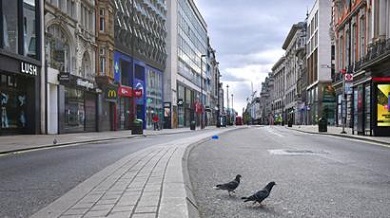
With the lock-down in full swing and Boris now in intensive care a degree of monotony is descending upon the Ingolby household.
You can only undertake your daily routine … collect the newspapers, make breakfast, deal with correspondence and bills, listen to the radio, watch television, go shopping for essentials (if required), have a post-lunch nap, do some physical jerks and/or go for a 6 mile walk [well, unless you oversleep], make yourself a stiff drink in order to take in the BBC One 6 O’ Clock News, have a bite to eat and then go to bed … so many times before boredom sets in.
 Mine was lifted somewhat yesterday by a report in The Times by one Charlie Miller sent from Ottawa about a study by the Concordia University in Montreal just published in the journal Sleep on the subject of sleep patterns.
The report’s author Neil Stanley has found that a one-hour nap after exercise is enough to bring about deep sleep, which in itself aids memory formation.
The study involved 115 healthy volunteers in their twenties. One group was to nap for an hour; another to pedal on an exercise bike for 40 minutes; and the third to do both. Then all three took part in a memory test.
The study showed that those who combined both exercise and nap were far more accurate in their results, its conclusion being that doing both helped to fend of memory loss.
Apparently brain activity reduces by up to a quarter during sleep and sleep improves the flow of information between different parts of the brain by strengthening the connection between cells. In short, a combination of sleep and exercise works together to enhance long-term memory.
Dr Stanley said: “Children have loads of deep sleep because everything for a child is something to memorise. As we get older, we start losing that stage-three sleep, and our memories get worse. Deep sleep gives your brain the time to lay down memories, to file them away”.
This is why students should not cram all night before exams, contrary to popular wisdom.
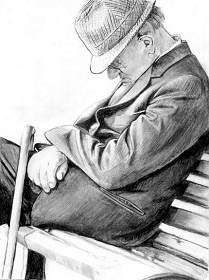 The study also suggests that exercise followed by a snooze might decrease an individual’s risk of developing Alzheimer’s.
For anyone of my age (68) this news is all very interesting and encouraging and something that I am now going to allow for in my current fitness campaign.
As regular Rusters will be aware, I am currently embarked upon a routine of seeking to knock out a 6 mile walk during my one exercise per day expedition, subject only to “nursing” my chronic Achilles tendon inflammation when necessary.
For example, yesterday I felt particularly lethargic prior to setting off, found my ankle protesting almost as soon as I did and eventually abandoned my walk a mile and a half out … and retraced my steps.
Once you get beyond a certain age in life, you have to listen to your body rhythms.
As I spent most of the night awake, I tend to nap in the late morning and again after meals and have never had a problem nodding off – my repeated joke is that, whenever I launch myself at my duvet pillow, I’m already unconscious before my head reaches it.
The only thing about this new study on sleep that concerns me is that its recommendation is that – to ward off Alzheimer’s – one should first take exercise and then have a nap.
I do things the other way around – i.e. have a nap and then take exercise.
 My body rhythms tell me that this is the correct way to proceed, but maybe I’m completely wrong and I’m actually “giving myself” Alzheimer’s by having my nap before – not after – my exercise.
The other thing that’s occurred to me since I began composing this blog is that about 50% of the time, when emerging from one of my naps, I “come to” with absolutely no idea what the time of day it is.
I’m beginning to sense that maybe I’m one of those people who goes to sleep to wipe their “hard memory drive clean” so that their overloaded brain has some spare capacity into which it can record what goes on in their waking hours next time they have any.
If they have any.
