
We are where we are
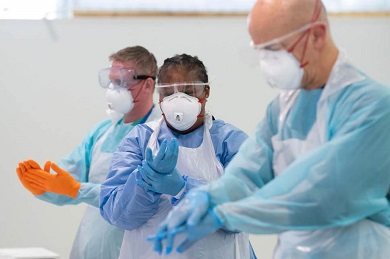
Last night at about 7.40pm by chance – not long before my standard bedtime – I joined the BBC1 broadcast of its long-running news & current affairs investigative programme Panorama (season 29, episode 17, entitled Has The Government Failed the NHS?) in which reporter Richard Bilton examined the Government’s state of readiness and then performance over the course of the coronavirus pandemic to date.
 It was an excellent piece, made for compelling viewing and I’d suggest that by noon today – by which time Number 10’s public information and PR teams (not to mention the Cabinet ministers) will no doubt have digested it – any complacency that had left in Government and Whitehall circles over the way things have been going it will have been reduced to dust. Or should have been.
This programme did more to hold the Government to account in half an hour than all the pantomime daily 45 minute press conferences mounted at Number 10 every afternoon since 16th March lumped together … and that includes yesterday’s example which opened with the innovation of a new stunt – a question put by a member of the public supposedly selected by some independent constancy outfit hired for the purpose.
See here for a link to the BBC iPlayer page – BBC PANORAMA 27th APRIL 2020
However, of course, there is ‘holding to account’ and there is holding to account.
I’m getting increasingly fed up with politicians, journalists and people contributing to phone-in programmes loftily ranting on about the Government’s performance with the benefit of hindsight – anyone can do that on any historical event or episode if they can be bothered.
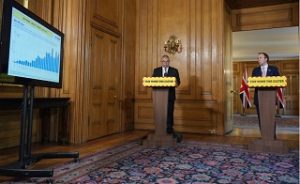 In my view the British public have just about had enough of it. We’re really all waiting to hear what’s going to happen next, but the Number 10 daily press conferences are a complete waste of time in this respect.
Though nothing would ever surprise me, my hunch is that the Government, Whitehall and all who travel with them (from the scientific and medical experts downwards) conducted war-games and carried out epidemiological projections for every possible eventuality long ago.
It’s quite possible that – having already long ago taken far-reaching strategic decisions as to what is going to happen when – for the last three months and now going forward the Government has been engaged in a process of dealing with how these are implemented; how the public, business leaders, sports administrators, the military and other interested groups might react to things like the lockdown; and, above all, assessing how things are going in the round on a daily basis, then gradually drip-feeding out the measures they’ve decided to take as and when they feel they can.
 It wouldn’t surprise me in the slightest if the toughest aspect of the nation’s response to the crisis is that of the numbers – those who might get the virus, those who might die from it – and trying to get the difficult balance right between “what is acceptable” and what is not in every circumstance that presents itself.
Yesterday there were a couple of examples that illustrate what I mean.
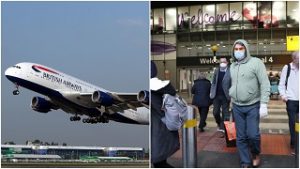 By mid-morning the issues of the day were (1) “Why is it that, when other countries (who seem to be more successful in dealing with the virus than the UK) have ‘closed down their borders’ and/or are operating a policy of putting everyone who arrives in or on their territory into immediate quarantine for a fortnight, we seem to have no controls whatsoever at our airports and are simply letting arrivals – even from badly-hit countries – straight out into the community?”; and (2) “We have just learned that the NHS only began testing the elderly about to be released from hospital in order to return to their care homes about ten days ago: how big a cock-up is that?!?!?”
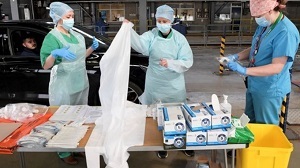 Leaving aside for this purpose the scandal of the lack of adequate stockpile and supply of the right PPE equipment and the fact that I have absolutely no idea what I’m talking about, let lone any expertise in epidemiology whatsoever, I suspect it could all come down to the projected number factor.
The experts have probably told the Government that frankly – in the scheme of things – ‘controlling’ airport arrivals will have little to no impact upon the spread of the virus.
The efficacy of tests done at airports is marginal because the virus can incubate for a fortnight plus – thus anyone tested and pronounced negative at an airport may actually have it anyway. But secondly, even if every airport arrival does have the virus, if we’ve got the NHS resources to ‘pick them up’ when they begin displaying symptoms, we can still deal with them via the new Nightingale centres and other measures put in place to cope with a “worst case” scenario. And there won’t be too many of them.
Better, therefore, to concentrate our resources elsewhere, rather than go to the costs and trouble of ‘testing at airports’, even if that would apparently look logical and/or “good practice” to the public.
 As for testing the elderly going back from hospitals to their care homes, the logic may run like this.
If a virus positive oldie goes back to their care home, the worst that can happen is that they infect their fellow residents (maybe 25 to 30 per average care home, plus perhaps the same number of care workers). That’s as but a pin-prick compared to the number than could easily be infected by anyone going back into the big wide world. Ergo, you save your (precious and limited) and testing resources for the latter.
Just a thought.
