
Will the real Impressionists stand up?
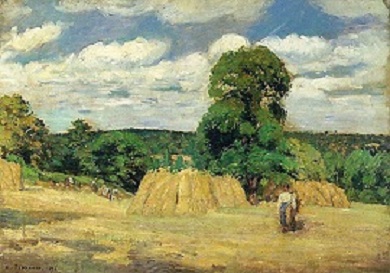
 Yesterday in our art course we studied the remaining two impressionists – Camille Pissarro and Alfred Sisley.
The feminists argue the inclusion of Berthe Morisot and Mary Kassatt and, though we did not study her, Eva Gonzales.
Pissarro is my favourite.
I have seen so much of Claude Monet’s work, notably his water lilies, and Renoir that they have long ceased to have an impact and I classify them as museum shop art.
You can see water lilies on scarves, bookmarks, mugs and table coasters.
Pissarro’s work is less ubiquitous and his use of a path leads the viewer into a strong composition.
A smoking factory increases the sense of location.
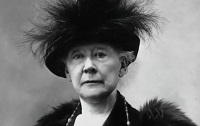 I am dubious that Mary Kassatt merits inclusion.
She came from an extremely wealthy American family and did much to foster Impressionism which – as new art attracting new money in relatively new country – proved highly popular in the United States.
 During her long stay in France two other Americans Gertrude and Leo Stein were to patronise Picasso, buying his first sold picture for $500.
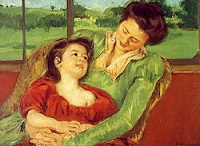
However Kassatt’s paintings we saw were sentimental ones of mother and child.
The feminist argue that this reflects society’s view of women but at roughly the same time Gustav Klimt was starting his secessionist movement and painting in a wholly different style than he was as court painter.
The problem I have with the new estimation of woman artists is that it based more on the hardship of their lives than the critique of heir body of work.
Every review I have read of Artemia Gentilleschi’s forthcoming exhibition refers to her rape and severe giving of evidence at the trial of the culprit.
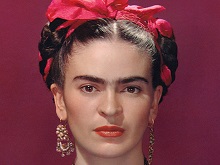 Recently I asked a young aspiring female artist who were her favourite painters.
She replied Frida Kohla and Matisse.
I would not bracket them in the same breathe and I do feel Kohla’s reputation is based on her suffering.
Given their popularity, it’s strange that the collective Impressionism is a loose word.
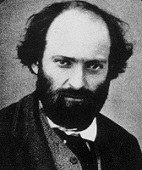 Both Manet and Degas did not consider themselves impressionists and Paul Cezanne, as the bridge between Impressionism and modernism, is arguably the more important in the history of art.
Nevertheless there is always something uplifting about their use of light, their en plein air compositions and depiction of nature.
