
World War One/PBS
There is a tendency in covering World War One to which I plead guilty of limiting our interest to the loss of young life in the trench warfare.
This excellent series gave a much broader canvas and I was particularly interested in 1916-18. With war bogged down in the trenches of northern France and Flanders, Germany in particular was seeking to foment disorder amongst the allies.
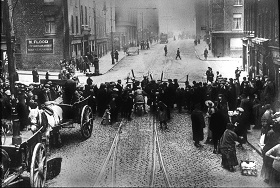 They supported the cause of Irish independence which led to the Easter Uprising and – crucially – the Bolsheviks which led to the Russian Revolution effectively taking Russia out of the war.
One suspects they were behind fairly widespread strikes in Britain too. This support of the communists was to rebound on Germany as it resulted in domestic social unrest and a lack of any identification with the war effort as the economy crated.
So much so that the Kaiser was forced to leave Germany.
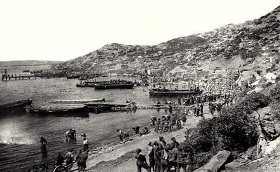 1917 also witnessed the disaster of Gallipoli. You could argue that 3 independent countries were to emerge from it.
The escarpment from which Turkish gun fire rained on the Australian and New Zealand troops was commanded by Kemal Ataturk the first ruler of modern Turkey.
The slaughter of Anzac troops – and it it is sometimes forgotten French and British too – led to Anzac Day and the independence of Australia and New Zealand.
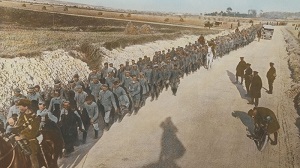 1918 witnessed counter hostilities. I was surprised to learn that more Allied troops died after the German offensive than at Passchendaele but Marshal Foch successfully organised the German army repulsion from Amiens and counter offensive.
The ramifications of The Treaty of Versailles, when Georges Clemenceau and the Italian prime minister overruled the more liberal Woodrow Wilson, effectively to grind Germany’s nose into the dirt were to lead the rise of German nationalism and another global war .
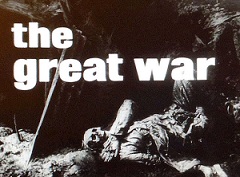 I can remember The Great War a series broadcast by BBC in 1964.
There were ex-soldiers who could give interviews. Michael Redgrave narrated it with contributions from Marius Goring, Ralph Richardson and Emlyn Williams.
It was a collaboration with the Imperial War Museum and historian Corelli Barnett was one of the scriptwriters. Obviously there was no one left to interview for this series but it had accurate historical detail, good graphics and newsreel footage.
