
Biographies
I recently moved from reading fiction to biography. Why do readers like biographies? The obvious explanation is the desire to know more about the subject and the times in which he/she lived. My own interest lies slightly elsewhere – namely, would I like to have met the subject?
The first biography I read was that of Kevin Keegan by Anthony Quinn, a writer I much admire.
You don’t have to be a football person (I’m not) to appreciate that Kevin Keegan dominated its landscape. As a young, but not supremely gifted, player at Doncaster Rovers he made a move to Liverpool. Only 5 feet 7, he had sufficient spring to became a lethal header of the ball. From Liverpool, after negotiating a low transfer figure, he moved to Hamburg. Not many footballers made the move to European football as successfully he did. He returned to England to become one of six England captains in the Southampton team.
After Ossie Ardiles was sacked, he took over as manager of Newcastle. Despite having a rant on TV, his Newcastle side ran Fergie’s Manchester Utd close. Mohammed al Fayed appointed him as Chief Operating Officer when he acquired Fulham and later presented him to the country as England’s boss. Never the greatest tactician, as he relied more on emotion, he resigned from this post
It’s enough of a life to make for a good biography so Quinn, a Liverpudlian, does a very good job. I would like to meet Kevin Keegan.
After reading Francesca Wade’s biography of Gertrude Stein, I was less inclined to meet her.
She was a major figure in fin-de siecle 19th century Paris – the world of Picasso, Matisse, Ernest Hemingway and Scott and Zelda Fitzgerald. However, there is less about Paris than her writings. Stein was redefining the frontiers of grammar and syntax in “The Making Of Americans”, which some critics called Cubist. Stein had great faith in her writings – as did her lifetime partner and factotum Alice B Toklas – but not all publishing houses shared her view and several other writers – like James Joyce and Samuel Beckett both also living in Paris – were more celebrated, as was the poet T.S Eliot.
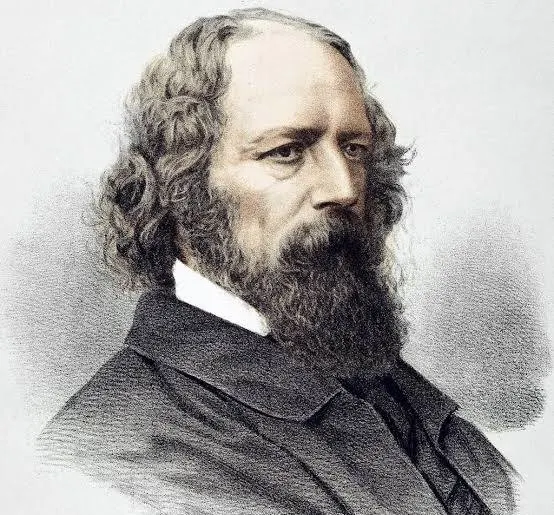
Nor would I have much interest in meeting Alfred Tennyson after reading the Richard Holmes biography.
He was scruffy, perpetually smoked his pipe and drank a bottle of wine daily. He inherited some of his father’s instability, was a depressive, twice spent time in asylums and was an erratic friend. There is a connection with Gertrude Stein. Stein was educated at Harvard, one of their first women, whilst Tennyson had advocated the notion of a woman’s university.
Two aspects of him did engage me.
Was his friendship with Arthur Hallam, a debonair Etonian engaged to Tennyson’s sister Emily, platonic? Secondly, Tennyson had a huge interest in science – particularly astronomy – but in also geology and evolution. Given his disturbed father was a rector, there must have been a conflict between conventional Christian notions of the Creation, on the one hand, and the New Science and the view the Earth was not the centre of the universe, on the other. Tennyson was not conventional and conflicted between his official post as Piet Laureate and an innate cynicism that is reflected in the reference to a mistake in his epic poem ‘The Charge of the Light Brigade’.
