
I’m adopting King Canute’s approach

Today I am prompted to resume my occasional role as chief Rust correspondent on the onward march of gender equality by two developments.
First among these was the recent taking over of Radio Five Live, hitherto the haven of those of us who primary waking hours’ interest is dominated by news and sport, which was recently commandeered by a rash of programmes on female issues. Chief among these was post-birth ‘baby blues’ and the problems of coming to terms with the arrival of a child including the ‘unfair’ general view that mothers were automatically expected to expert in looking after one.
The second was the overnight news report of the latest ‘advancement’ for women in sport – the fact that Hasbro is bringing out a female version of the classic Subbuteo table football game – see here for a link to a representative piece by Josie Clark today on the website of – THE INDEPENDENT
 When talking within my social circle the descent of Radio Five Live into becoming a leading mouthpiece for the PC/female equality brigade is a recurring theme with its new routine of giving equal prominence to the reporting of women’s and men’s football results, presumably via the theory that this will promote not just acceptance of the former as a credible sport but encourage female participation and thereby indirectly improve the general health of the population.
Let me make two points in response.
 The first is that, among those of both sexes I consort with, the overwhelming reaction of hearing of Manchester City Women’s latest result – they being the leading team in English football’s Super League 1, for which on the latest (2017) figures I can find the average crowd attendance is 1,200 – given alongside the those of the real Manchester City in the Premier League (average crowd just over 38,000, average worldwide audience 12 million via 80 broadcasters in 212 countries) is a combination of derision and scorn.
Whatever happened to BBC impartiality and editorial judgement as to relative importance of news items? This sort of thing makes a complete mockery of the BBC’s proud near century-old global reputation as the apparent voice of reason in a sea of state-controlled propaganda and what we must now call ‘fake news’.
 An representative example of just how far the BBC has progressed in its abandonment of its former stance as an oasis of sanity in a world of subjective news came on BBC1’s 6.00pm news bulletin on Wednesday night this week when its lead story was a supposed BBC exclusive that tens of YouTube channels aimed at children were encouraging their audiences to plagiarise their course study essays by buying them online, a news item that barely merited two paragraph throwaway prominence on pages 2 or 3 of the nation’s broadsheet newspapers the following morning.
My second point – that the idea that giving greater prominence to ‘elite’ female sports results will encourage greater female participation in sport amongst the general population is at least highly debatable – is well made for me by the following piece by Anya Alvarez that appears today upon the website of – THE GUARDIAN
 Its key passage is that suggesting that giving specific media exposure to women’s sport will appeal only to women who play sport and not the general female population. Alvarez cites the fact that in North America only 28% of the audience of the espnW portal – dedicated to female sport – is female. Her most telling passage follows:
‘While [espnW] was created with the intention of serving a female readership, it continues to struggle to connect with them. Why? Because they’re targeting the wrong audience. Trying to reach women who don’t play sports and who weren’t given equal opportunity to play sports growing up is a misguided strategy.’
I couldn’t put it better myself.
The subject of elite women’s sport is a vexed one.
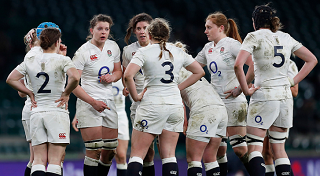 There’s a movement abroad at the moment to ‘sell’ women playing sports that have been traditionally the domain of men by the theme that part of the potential attraction to crowds and viewers is that ‘women play them differently’.
In other words, that while women play these sports to the same rules, their physiological differences cause them to use different skills to different effect and/or that their natural lack of strength and bulk (compared to men) means that they resort to bringing to the surface new and interesting facets of the ‘beautiful games’ they are playing that – who knows – may eventually bring new tactics to the male versions of these pastimes.
Frankly, I doubt the thinking behind this line. The fact is that – empirically, and also as a bloke (yes I am one) – those sports that place emphasis upon strength and aggression, e.g. contacts sports such as football, rugby, wrestling, judo and even some track & field events, those women who are best suited by physique and temperament always come to the fore in the female equivalent.
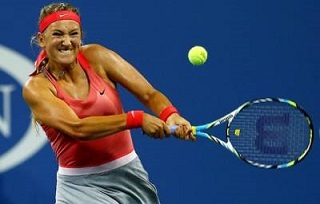 That’s why, over time, the female version of tennis (and let’s leave the Williams sisters out of this for a moment) has come to its current 21st Century incarnation featuring a preponderance of six feet 1 inch Amazons belting the ball across the net and effectively playing what amounts to nothing more than a slightly-inferior imitation of male tennis, with its big serving, heavy-hitting ground-strokes and overhead smashing – Bing Bang Bosh tennis if you wish to use the term.
That’s not a form of tennis that as a male I particularly want to watch. Why? Because if I want to watch it, I’ll watch male tennis because men – inevitably – play it better.
Call me a sexist pig if you will, but where are today’s lady tennis players who graced the court in the feminine style of Maria Bueno, Evonne Goolagong/Cawley and even Chris Evert?
 To all extents and purposes – and with perhaps exceptions that prove the rule like the only female player I enjoy watching today Garbiñe Muguruza – as a sub-species they finally became extinct about twenty years ago.
And more’s the pity.
Furthermore, and I may be wrong in saying it but what the hell, I’d bet a penny to a pound that even at the major (Grand Slam) tennis tournaments such as Wimbledon where the women’s version of the game plays to sell-out crowds day after day, year after year, the great majority of the onlooking females (whether there in person or watching on television) would rather see ‘women like themselves’ playing tennis that resembles their own style of play whenever they hit a ball in their own lives … i.e. rather than the thunder-and-lightning imitation of men’s tennis displayed by the modern ‘super-women’ that dominate the elite echelons of the sport today.
