
Sometimes it comes to this

I once heard an interview in which the learned guest offered the statement “If you ask forty-two economists their view, you’ll get forty-two different answers”.
 Arguably – if you’re anywhere as cynical as I am – the logical extension of this dictum is the assumption that, if just one of them was subsequently proved correct – even if he (or she) didn’t have a clue what they was talking about before, then, or even now – they would then be able to live off the ‘triumph’ for at least the next decade on the basis that they got that particular “big call” right.
[Meanwhile, as night follows day, the other forty-one will each come up with different reasons as to why the facts at the time weren’t quite ‘on the money’ – and/or sundry other factors – which simultaneously explain why they happened to get it wrong and yet also strengthen their conviction that their particular economic theories remain sound].
 As with economics, as with UK education.
Generalising wildly to make my point, the vast bulk of state education teachers seem to be of the view that education should be an all-round affair, not especially dependent upon exam results, which offers pupils the chance to develop in an uncompetitive atmosphere.
 Elsewhere – aghast at the league tables showing the UK gradually slipping ever further down the rankings in terms of pupil academic achievement compared to e.g. China and other Far East countries in which pupils are disciplined and hot-housed to spectacular effect – from time to time the Government (usually a Tory one) espouses a policy of “restoring” exam results to prominence bordering upon obsession, preferably taught in the old-fashioned, straight-talking, dictatorial, “hang and flog ‘em”, “learn your times tables by rote” style of a 1950s minor public school which has the late Jimmy “Whacko” Edwards in the role of headmaster.
 Cue a breakout of violent intellectual argument as to which approach is superior.
That registered, whenever a such a policy is implemented, the media later always ends up being filled with stories of schools and headmasters who have tried to ‘cheat’ the new system in order either to fend off the ignominy of becoming known a ‘poor exam results’ establishment and/or enable themselves in the queue of those who may become eligible for extra funding for having produced better exam results.
 I’m referring to those who switch their schools to “easier” exam-result subjects and/or, for example, operate a campaign to exclude disruptive and/or thick students – who inevitably may tend to depress their school’s overall exam results averages – from their lists of enrolled pupils.
One might suggest such things are only products of human nature.
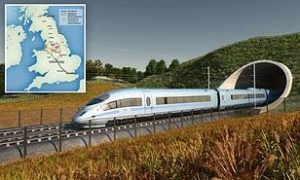 Which brings me to my subject today – the much-troubled HS2 project.
This is currently, for what seems like the umpteenth time, yet again under existential review – on this occasion by the Government of Boris Johnson – because of its spiralling costs and continuing deep divisions over its purpose, likely effectiveness and apparent ever-decreasing lack of value for money.
One of the privileges of knocking out the odd column or two for an organ like the Rust (but don’t mention it to the Editor) is the plus that – unlike Fleet Street’s finest – we don’t necessarily have to research much detail, or even get the facts particularly right, in order to shoot from the hip with our opinions.
 Anyway, for me, it was obvious that HS2 was always – and would ever be – a complete Horlicks from start to finish.
Someone, somewhere, came up with the “Big Idea”, in the process rather echoing the famous Aftermyth of War sketch from Beyond the Fringe (1962) featuring Peter Cook and Jonathan Miller [Advance warning to readers: you may need to turn your computer’s volume up in order to hear the dialogue properly] – see here, courtesy of – YOUTUBE
 HS2 would simultaneously be a ‘legacy’ project; help secure the future of innumerable contractors in the civil engineering sector; create hundreds of thousands of jobs; have an all-round “good feel” effect upon national morale; deflect criticisms that the UK was too London & South East-centric; reinvigorate the economy, especially in the Midlands and hopefully eventually the North; and, in other words, generally be “A Good Thing”.
However, it wasn’t long before the complications and rhino-sized ‘obstacles’ began to emerge.
Someone pointed out that – in the age of the internet, video-conferencing, social media and other means of ‘instant communication’ – the benefits of being able to get to Birmingham by rail 28 minutes quicker than had previously been possible were minimal.
Those in favour of the scheme then responded by changing its title from “High Speed 2” to “HS2” and then promoting other reasons why continuing with the project was worth it, presumably in the hope that nobody would notice.
Then the environmental catastrophe it would involve, the huge cost of compulsory home and business purchases it would require, the loss of Tory votes in the counties the line would be built through … and tens of other potential negative impacts that would result were raised.
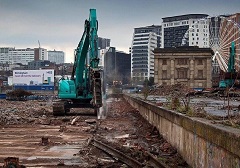 By then – operating on the basis that so many “white elephants” do – those in favour of HS2 began resorting to the mantra that so much preparatory money had already been spent that (okay, perhaps albeit regrettably) it would still now be better to carry on, whatever the cost, than cancel it.
Ho hum …
