
Cosi fan tutte ( Glyndebourne) & opera v musicals
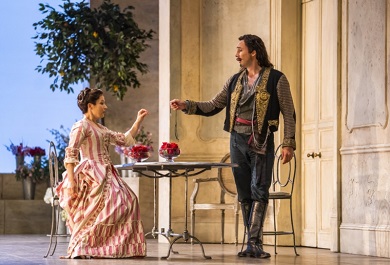
Last night I saw Cosi fan tutte at Glyndebourne.
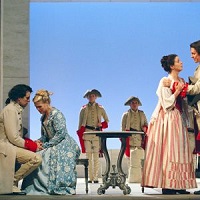 It was the third cooperation between Mozart and the librettist Lorenzo da Ponte. It might be termed opera buffa (comic opera) as it’s light-hearted, even silly, and unlikely to resonate with a modern audience.
The story is of two soldier friends whose paramours are two sisters.
The soldiers have a wily friend Don Alfonso who is so certain that the sisters will be unfaithful that he bets upon it with them.
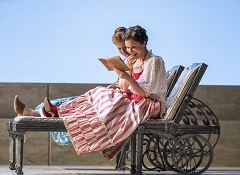 He devised a strategy that the soldiers, whilst supposedly away on service, will disguise themselves as Albanians and seek to seduce the different sister. Cosi fan tutte is translated as “All women behave like this”.
This and the portrayal of the sisters as unfaithful, fickle airheads would hardly sit well with #MeToo.
Further the opera does not really have one memorable aria.
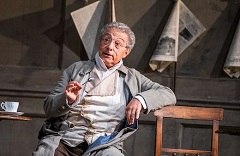 Like many I was introduced to opera by the route of Great Operatic themes – la Donna e mobile in Rigoletto, Figaro’s introduction in The Barber of Seville, the entrance of the toreadors in Carmen, the march in Aida, the overtures of la Traviata and The Meistersinger but I have never heard anything in such a compilation from Cosi fan tutte.
The director was Nicholss Hytner and the sets were wonderful. Hytner in his programme defensively wrote:
“The libretto of Cosi is skilfully constructed but I could hardly pretend to the online audience it isn’t also frivolous and to be blunt offensive.”
The opera is set in Naples and its bay was featured with a translucent back screen with trees and flowerpots in front of it. Yet this was not enough.
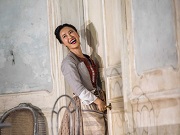 The best part is the sister’s maid Despina (Hera Hyesang Park) who is in on the plot and also gets to play in disguise a doctor and notary.
I saw soprano Ms Park last in The Barber of Seville as Rosalina and she is impressive.
However some may take justifiable exception in her Despina getting a laugh by playing the notary on walking sticks.
 The other cast sing well but I am sure I was not alone in finding the second act wearying.
Clearly the cast was pleased to see the return of the audience.
The performance began much earlier for me. Palaver might be the apter word.
On trying to book a month or so ago I was informed no single tickets would be released.
I was told to re-apply should more tickets be available with restrictions eased.
 As an associate member I received a fulsome letter from Glyndebourne’s chairman Gus Christie that he found the return of the audience very moving.
I replied more tersely that I wish I could have shared his experience but could not. I was then contacted by his p/a who sorted out a ticket for me. My travails did not end there as I found the website for ordering food most uncustomer-friendly. ‘Complete order’ apparently meant in web-speak “The order is complete”.
No confirmatory email was sent.
 Finally I received an email with ticket attached. No such e-ticket was.
You needed to download (and pay for) Adobe Reader to download it.
Another strident email to the p/a declared that I was now fed up paying an exorbitant amount for a ticket and doing all the work myself produced some assistance.
Add to this the obligatory wearing of a face mask and it was scarcely an enjoyable experience.
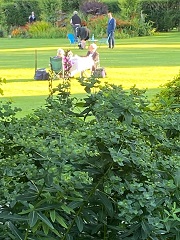
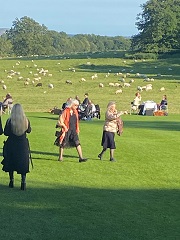
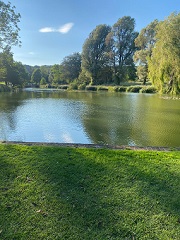
It was saved as the drive through Glynde and the gardens were simply magnificent on a warm summer’s eve.
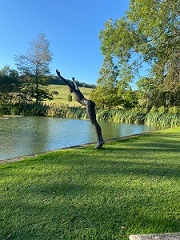 The setting was indeed magical but to attract a younger audience Glyndebourne needs a more relaxed dress code, less expensive seats and more accessible opera.
Most of the audience was 65 years plus and I imagine no more proficient than myself with being forced to the internet and mobile.
This brings me onto opera v. musicals.
The two musicals at Chichester Theatre I reviewed – South Pacific and Fiddler on the Roof – had themes of racial prejudice and displacement respectively with which the modern audience can identify.
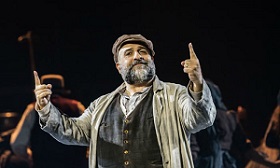 Listening to a prom devoted to the Hollywood musical last Thursday I heard the familiar songs sung by operatic vocalists.
Musical singers tend to be better actors and deliverers of songs. I prefer their rendition in the context of the musical itself. Yet for all of this opera occupies the cultural higher ground.
It’s the medium of corporate choice too.
Give me traditional Hollywood musical – especially from the Golden Age – any day.
