
Mendelssohn’s Scottish Symphony
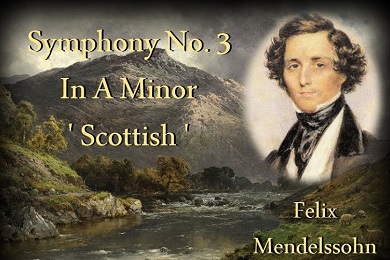
In my music class on the rise of the Symphony we studied this week Mendelssohn’s “Scottish” symphony – composed after a visit to that country by the German composer.
 Our tutor explained that Scotland exercised a powerful romantic appeal in the 19th century.
This was because it was considered the last wilderness.
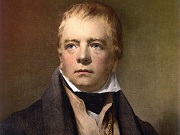 Another factor was the popularity of the novels of Sir Walter Scott.
The tutor mentioned that even today when he visits a bookshop in continental Europe the two most popular writings in the English language are those of Sir Walter Scott and Edgar Wallace.
Our tutor is well-informed and tends to talk at some length.
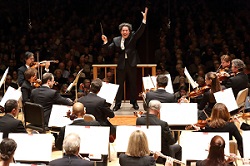 I have taken to asking him rather direct questions like
“Does a conductor really make a difference?”
He replied that it depended on the conductor, orchestra and composer.
Hector Berlioz and Richard Wagner, for example disliked conductors.
 My question this week was whether he endorsed the theory that Fanny Mendelssohn, Felix’s sister, was really the creative brains in the family.
Our teacher was on tricky ground as he thought not – and did not have a high view of her music – but with 3 women in the class had to pick his words carefully.
