
On a fundamental sporting dilemma

As regular readers will be aware, on this organ we have a number of subjects that we address upon a recurring basis simply because from time to time – usually prompted by either stories featuring in the media and/or events in our lives – they come mind.
 Today’s example is arguably a glorious conundrum – ranking perhaps alongside that faced by Shakespeare’s Hamlet (“To be, or not to be: that is the question”) – that many of us would only be too content to confront were we exceptional enough to warrant the experience.
I’m referring to the elite sporting stars’ vexed issue of deciding whether it is better to retire at the top – perhaps prematurely, some might argue – or, alternatively (at the other end of the dilemma horn), perhaps in an effort to establish your legacy in the “All Time Great” stakes, to carry on at the summit for as long as you can … thereby potentially risking “overstaying your welcome” and ultimately leaving a lasting public memory of sad decline as you battle with the passage of Time (e.g. being eclipsed by youngsters on their way up whom in your pomp would have been barely fit to tie your bootlaces).
Today’s post is prompted by the recent shock retirement from professional tennis of Aussie Ashleigh Barty.
Firstly, some facts.
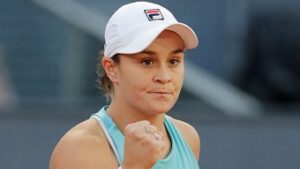 Barty, who will turn 26 in less than a month’s time, is only 5 feet 5 inches tall but is the reigning Wimbledon and Australian singles champion, a three-time Grand Slam singles winner and also a two-time Grand Slam tournament doubles winner. She has been the WTA world ranked number one female for the past 121 weeks.
She first took an indefinite break from the rigours of the global tennis circuit treadmill at the age of 18 and during it ended up playing cricket, being good enough to sign for the Brisbane Heat in the inaugural Women’s Big Bash League despite having no formal training in the sport at all.
Taken at face value, it seems that Barty’s motivations may be similar to those of All Time Great male tennis player Bjorn Borg, who originally retired at the age of 26 before later making a failed half-hearted comeback.
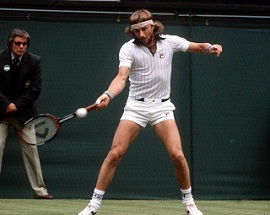 Borg had literally “been there and done” everything he could possibly have achieved in the men’s singles game – significantly, he’d already been part of the endless grind of elite professional tennis for over 12 years – and almost certainly, despite still being at the absolute pinnacle of his sport, having lost a couple of close matches with American John McEnroe, he could sense that from now on “the only way was down”.
All the above noted – as any sporting great will appreciate all too acutely, given that (in bucket chemistry terms) the global average life expectancy of a man is 70 and that of a woman 75 – once embraced, retirement tends to last a very long time.
T hus, when you’re both world class and highly successful at what you do – and also enjoy every aspect of the existence, including the hard bits like the training, the travelling, the media obligations and all the complications involved in living a celebrity lifestyle from which there is no escape (at least until you walk away) – it’s not rocket science to understand that for many the temptation to keep going is almost overwhelming.
Cue another reference by me to the occasion that footballer Jimmy Greaves was the subject of an edition of This Is Your Life.
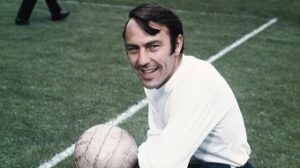 I was working in ITV at the time and shortly after the recording of the show had a routine meeting with the producer. At the time Greaves, of whom I was a big fan, was nearly 40 and still turning out for Brentford at a level of football well below the First Division. I mentioned that I couldn’t see the point in Greaves carrying on – he risked damaging his reputation.
The producer responded that, as it happened, at the after-show party, he’d raised the subject with the man himself. Greaves’ reply was that he loved playing football, it was all he wanted to do and, if he couldn’t make the Brentford first team, he’d be only too happy to turn out for the Brentford seconds.
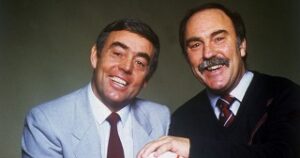 (Ironically, of course, after retiring my hero – along with Liverpool stalwart Ian St John – eventually one half of the football-related TV presenter duo known as “Saint & Greavsie”).
There are certain times when you cannot counter an argument like that.
At the end of the day, every sports star’s decision about when to retire is a personal one.
As is what they do afterwards – e.g. maybe stay in their sport in some manner, perhaps as a coach, mentor, administrator, agent, manager or media pundit, or maybe go into some unrelated business or another, even take up acting …? There are hundreds of ways of making a living, making a life … leading a contented existence.
 So maybe Ashleigh Barty – who got engaged to professional golfer Garry Kissick in November last year – is simply going to get married and become an eternally happy housewife and mother.
Then again, given that sportspeople tend to harbour huge inner drives and determination, maybe it’s just as likely that she might switch to another sport.
Golf for instance – she’s already a tournament winner at her local club. Maybe with a bit of assistance from Mr Kissick, she’ll re-emerge in a year or two as a pro golfer …
