
On Women And Sport
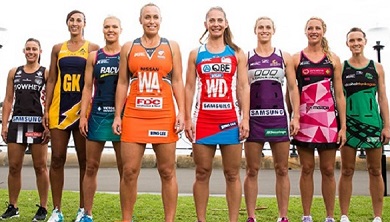
I’m risking the wrath of female Rusters everywhere – never mind our esteemed lady columnists who, it may be said here without fear of contradiction, are more than capable of looking after themselves in matters of opinion – but my theme for today is a push-back against the fashionable modern “woke” thrust that women in elite sport should automatically be granted the same media coverage, wages and celebrity as their male counterparts.
 The reasoning behind the campaign stems, of course, from the ridiculous argument that women have always historically been discriminated against by men, an outrage that will supposedly only be eradicated when any and every woman “doing the same thing as a man” (whether placing 10,000 biscuits per day in boxes on a factory assembly line or playing right wing back for their country in a soccer World Cup tournament) gets paid the same as a man plying the same trade would be.
Confession time: whilst I accept the argument of “like pay for like work” in any work situation in which the skills, dexterity and output required could easily be achieved and/or expected by either (or indeed any) gender, I balk at being asked to do so when it comes to any elite sport in which the sheer excellence of sporting prowess and/or team performance achievable depends significantly upon the strength, fitness level, size, speed, stamina and bulk of the individual competitor: my view of the matters springs solely from the fact that these attributes are naturally more inherent in men than women.
 Whatever happened to “equal opportunity” (as it used to be called back in the 1980s) – the notion that if only women were granted equal opportunities in every area of life it wouldn’t be long before the primary goal of true meritocracy would out and women would ascend to their natural level of excellence, whatever that turned out to be?
In the 21st Century, it seems, “equal opportunity” is not enough – though it isn’t clear to me whether this is alleged because of supposed continuing discrimination (however sly and covert) against women, or alternatively because women just haven’t been good enough or been able to organise their lives well enough to e.g. put in the hours and effort that men do.
These days the watchword – although not brayed too loudly from the rooftops or painted on the placards being carried through Whitehall by mass protest marchers – is “quotas”.
 If the proportion of women in the nation compared to men is 48:50, therefore “equality” will not truly arrived until at least 48% of MPs and 48% of all those of the boards of FTSE 100 companies are female. Or so runs the argument.
In other words, standards of merit and/or performance are being dropped or ignored.
All that matters is tokenism.
This approach has become ubiquitous in the UK, but slightly skewed. It’s admittedly lazy of me – I haven’t bothered to research the true figures – but I believe it is a fact that 10% or less of the British population could be classified as coming from the BAME community.
 Yet in our television programmes and advertisements – it seems to me – that increasingly the BAME community features more and more heavily … and, more often than not, to (proportionately) far more than 10% of those taking part.
Surely – in tokenism terms, if BAME community members are to be “accurately” represented, they should constitute no more than 10% of the participants?
Don’t get me wrong. I don’t have any problem with the cause of diversity and the wonderful kaleidoscopic nature of our society being celebrated – I just take issue with the “tokenism” justification (to the extent it argues that the proportion of any/every section of society should be accurately represented in every media product).
Which brings me to the point of my contribution today.
I am resistant to the argument that – because individual elite male sports stars get paid £X per week for their excellence, therefore individual elite female sports stars should also be paid £X per week … and also be given similar exposure and airtime coverage in the media.
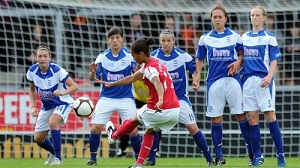 For me, true footballing equality between the sexes will (or would) only be achieved when there is no such thing as women’s football. Because by then – if it ever came about – all the best women will be playing men’s football.
Or, to put it another way, there’ll only be one “elite football” but it will be available to all genders, as long as they’re good enough.
Women should not get equal elite sporting pay with men when the essential truth about their version of the sport is that – yes, technically it is de facto football – but the best that can be said of it is that it represents the best standard at which women can play it.
Especially when the best women tend to be those who are bigger, stronger, more skilled … er, yes … in fact, in comparison to other female players, those who are capable of performing more like men.
Recently I watched Judy and Andy Murray arguing on breakfast television that, as part of its Sports Personality of The Year event, the BBC should now add a separate “Female Sports Personality Of The Year Award” – their reasoning was that it had been well over ten years since a female won the main Award and this was apparently unfair.
 Make your minds up, Girls!
Do you want to be equal, or do you want tokenism?
In addition I also have noticed in the media this week separate reports upon serious medical studies that have shown that female football players are proportionately far more likely than men to suffer both catastrophic ACL injuries to their knees – and now also dementia through heading footballs – simply because of their physiology.
Are the arguments that female sports should have greater support, promotion, publicity, celebrity and indeed pay in order to encourage young females to take up sport and improve their all-round health really all they’re cracked up to be?
If the drive to make women play sports and games more intensively and better – i.e. closer to the standards that elite men compete at – is also going to lead to proportionately more injuries and long-term health issues for female participants, is it all worth it?
