
The Magician/Colm Toibin
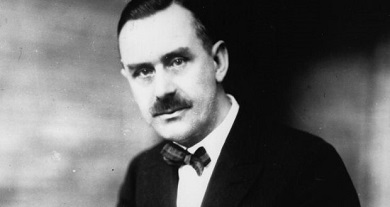
One of the interesting aspects of biography is the attitude – often better described as the relationship – between the writer and his/her subject.
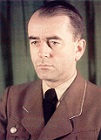 Gitta Sereny wrote an excellent biography of Albert von Speer but seemed to be in thrall of him.
Tristram Hunt wrote a detailed account of the life of Sir Josiah Wedgwood but his left-leaning views motivated an attack on venture capitalists, holding them responsible for the demise of the company and loss of jobs in his constituency of Stoke.
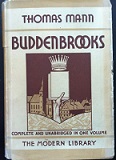 No such critique could be made of Colm Toibin’s life of Thomas Mann (1875 – 1955) [the name “Magician” was the pet-name of his daughter Elizabeth].
Thomas Mann’s life is worth telling.
His father was a wealthy Lubeck grain merchant and senator his mother Brazilian. With his first published novel – Buddenbrooks – he established himself as a writer and in 1929 received the Nobel Prize for literature.
 His most famous novel is Death In Venice, a story of a musician’ s suppressed homosexuality when he meets a beautiful Polish boy on the Venice lido.
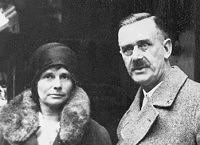
Mann was writing from the heart – and possibly the groin – as, although married to Katia from a rich Jewish non-observational family and having 6 children, his private journals reflect his desire for his own sex.
As a gay writer Colm Toibin covered this aspect of his life with empathy.
Thomas Mann led a peripatetic life as he lived in Munich, Switzerland, Stockholm, Princeton and California.
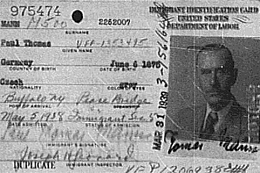 He never really attached himself to either the anti-Nazi cause, unlike his brother Heinrich and his children Klaus and Erica who “married’ W.H. Auden in order to have a British passport, nor the anti-communist one.
In the book you read of the pressure he was put under by the State Department not to visit East Germany once he became a US citizen.
Like all good biographies, the journey of his life takes the reader through the political events and literary figures of the day and is always extremely readable
