
Upon coming out of it
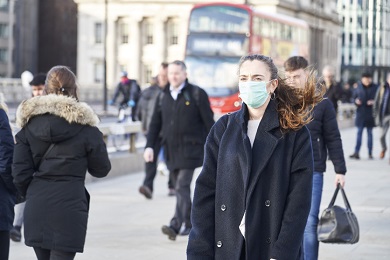
As we come back from lockdown to “normality” some of us have had time for reflection as to how the past twelve months has affected the general public and ourselves in particular.
 If I’m honest, at the beginning – both in prospect and reality – I tended to be in tune with another resident of my apartment block who, in an email response to a female pen pal residing in the USA asking how the UK was getting on with the pandemic, stated that people had stopped bothering him, the roads and pavements were devoid of vehicles and humans, aeroplanes had ceased flying over his home – “What’s not to like?”
My version of his sentiment was more mundane.
As a senior citizen in my late sixties I couldn’t see that lockdowns, restrictions upon going out, meeting others and/or travelling (unless essential, e.g. shopping) – except perhaps for 60 minutes of exercise per day – was going to change my life a great deal.
 Of course, as – on top of the restrictions upon movement – employees either also got furloughed or lost their jobs, or “worked from home” wherever possible … and then, if they were parents, had to deal with the complications and hassles of doing their own job as well as also “home schooling” their kids … for some the stresses and strains of non-normal everyday life began to mount up.
Or maybe all the above was just a heavy (and maybe ultimately healthy) dose of reality kicking in.
There’s little more calculated to make the Average Joe in the street be thankful for having his “normal” life than suddenly having to experience how some of those in less happy situations are consigned to live theirs.
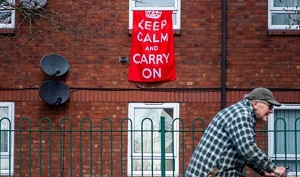 Suddenly it was if “we were all in the pandemic together” and some of the Brit WW2 wartime spirit bubbled again to the surface – that is, if in this day and age days that is not a too old-fashioned, Empire/colonialist, slavery-associated, non-PC, statement to make.
Since March 2020 I’ve spoken to and/or come across people of all ages who seem to have survived the last year and bit with relatively few hiccups but, then again, I’ve also talked with others – some of them close family – who have confessed, either openly or confidentially, that they have found the periods of lockdown far more trying than they’d care to admit.
 Sometimes this has been because of anxieties over their own safety and/or that of their young children in circumstances where some people are content to take greater liberties than others with – or even operate outside – the advice of the scientists and/or Government rules.
Sometimes it is because of issues associated with working from home.
And sometimes it’s just because the long periods of “being confined to barracks” has had a numbing or even negative effect upon their demeanour or mental health.
 More recently, for want of anything more productive to do, I decided to give myself a project to “thin out” some of the tens of old files that I have accumulated in the three decades that I’ve been living in my current abode.
Having always had a fairly cavalier attitude to the past, I like to adopt the line that I only wish to “live in the present” and before the beginning of my quest I’d assumed that a minimum of two-thirds of my “stash” of flies (containing untold numbers of invoices, bills, bank statements and machine guarantees etc.) could go to the great files graveyard in the sky without any pain, or indeed anything “going west” that shouldn’t have.
 I have to say that it’s been a most interesting exercise.
Recently I’ve spent more time than I’d care to admit “re-visiting” purchases of white goods, hi-fi systems, houses, pine garden furniture, cars, and wedding rings … but also re-reading letters that I sent to – and/or received from – friends, acquaintances and others over the past ten, twenty or even thirty years … and yet since then have lost contact with or – dare I say it – in some cases I had completely forgotten ever existed!
It’s a funny old thing, life – isn’t it?
 Yesterday, after spending the best part of another seven hours going through yet more files, I came across a copy of an obituary of the father of a friend of mine with whom I once used to play golf almost every week – the son, not the father – but sadly no more (I retired from playing the game more than once a year because I suddenly “twigged” one day that I’d become so bad at it that it had become more of a chore than a source of enjoyment).
The obituary concerned had been published in The Daily Telegraph well over a decade ago now, which was a huge surprise in itself: to me it felt as though it was only about half that.
 I stopped what I was doing in order to read it again and remind myself of the gentleman concerned – an upright, always smartly-dressed fellow who could easily have come direct from Central Casting for a lead part in any black and white British movie made between 1935 and 1975.
He was still playing the occasional round with us until well into his 80s and held distinctly “traditional” views: for example, he objected on principle to women being allowed to play golf at all and used to became very agitated whenever we came across them on a course.
But this was not what struck me forcibly as I read his obituary again after spending the past three weeks of “re-visiting” my own rather unexceptional life via the fifty-plus files I’d amassed in my study.
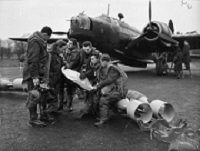 How’s this for just an early life?
Born in 1922, this character had been accepted to read medicine at Gonville and Caius, Cambridge, when in May 1940 he volunteered for flying duties with the RAF.
After training he began flying Wellington bombers and in May 1941, still only 18 – on a raid upon Nuremberg – his starboard engine failed and he had to fly home on one engine, holding the plane straight by constantly applying full rudder for more than five hours (an unique feat at the time), whilst to maintain height the crew had  to jettison everything moveable, including finally their parachutes, before they crash-landed in Kent not far beyond the coast.
He was awarded an immediate DFC and got married two weeks later.
He ended the war aged 23 as a squadron leader with a bar to his DFC having completed 60 missions, many in Lancasters, and taken part in major raids on the industrial cities of the Rhur, the Krupps works at Essen and Hamburg. And after that he had a forty-year civilian career and full life.
They don’t make many of ‘em like that anymore.
